
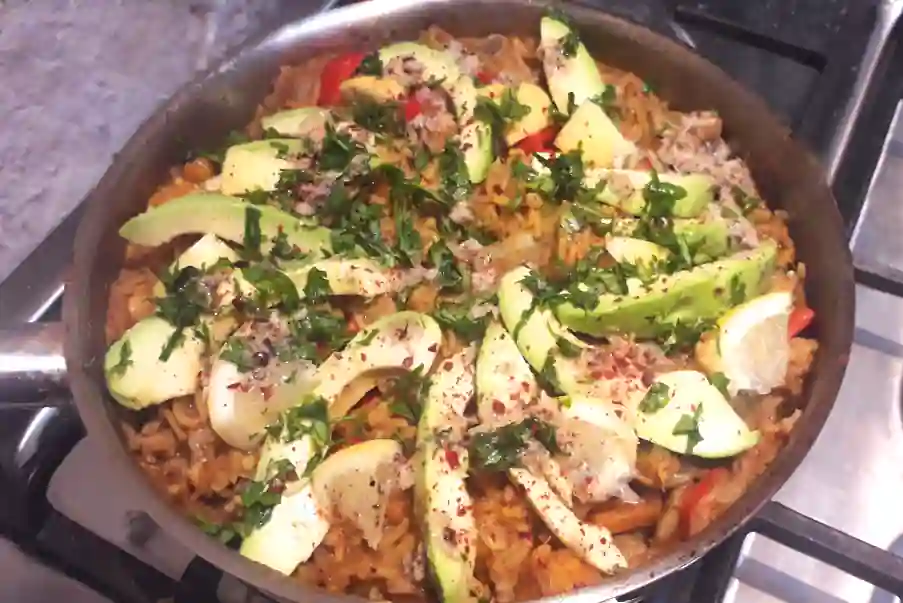
Not to be confused with the traditional Mexican rice dish, sopa de arroz, or rice soup, this post deals with a quite distinct Spanish vegan paella recipe. First we show you what constitutes a paella, demonstrating all the steps and principles of cooking up the real thing. Then we go off piste to create an authentic vegan paella in the Alicante style – with a Mexican twist
What Exactly Is Paella?
Paella’s roots date back to the 15-1600’s: following the introduction of rice by the Moors to the Valencia region of Spain, farmers and shepherds started preparing humble communal dishes using rice, rabbit and beans which they cooked in a wide shallow pan called a paella
Modern paellas are widespread accross Spain and beyond, using a large array of simple and exotic ingredients, including seafood, snails, and even vegetables. The modern paella has also evolved into two main variants, the “classic” Valencian, and its cousin paella from neighbouring Alicante. Though similar they also have distinct cooking methods and flavour profiles. We touch on some of their major characteristics below
Here’s a short guide to all things Paella. I’ve used a vegan Mexican recipe to show you how, by following the traditional methods, you can use non traditional ingredients yet still create a unique paella dish
If you’re a hands-on kind of cook and don’t care too much about the ins-and-outs of paella theory, skip to the recipe. And maybe come back later for a wee read?
How To Make Authentic Paella
Ingredients & Methods
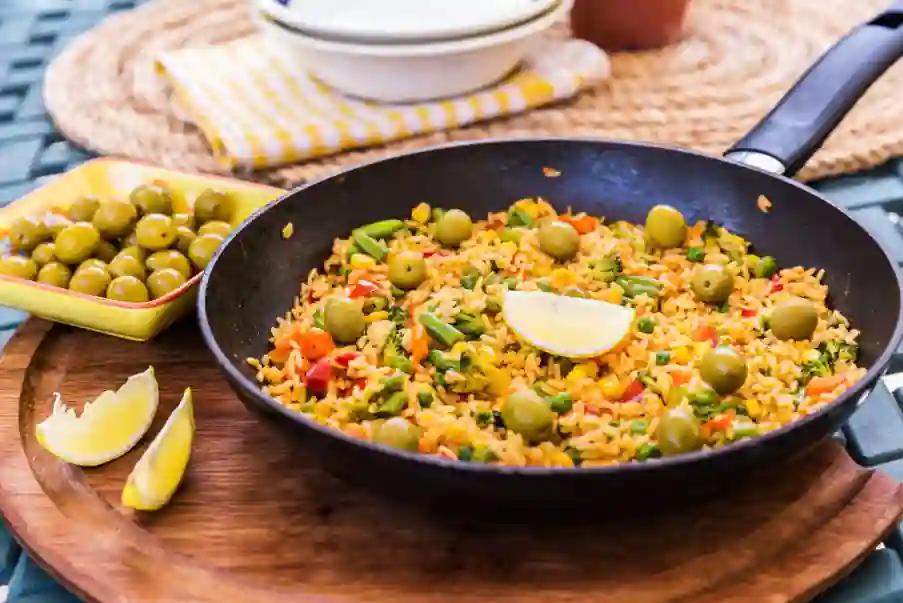
Rice
Arroz (rice) A La Paella: the original name of the dish. Paella is made in a paella
Which rice? Paella is dry. Bomba rice from the Valencian Albuferra is the classic, being highly absorbent, but there are many other types which connoisseurs can distinguish in taste and texture. Any medium grain highly absorbent rice which holds its shape is good
Spices
Saffron: Paella is not yellow. It has saffron which is yellow, but this is used for flavour. Being expensive you might be tempted to omit this queen of spices. That’s fine. But please, please don’t stain your rice with that tartarazine-based paella colouring that Spaniards adore, but is only a food dye with no flavour and zero nutrition.
Add turmeric when it’s aroma enhances your particular dish. But not just to make it yellow. Paella is not yellow
Paprika: known as pimentón in Spain, this versatile spice can add a rounded sweetness and spiciness to virtually any savoury dish. Pimentón is actually just ground dry capsicum. It is often a blend of different peppers which may be sweet or spicy hot resulting in unique qualities. The most well known is Pimentón De La Vera , a smoked version from Extremadura’s La Vera Valley. Unsmoked paprika comes mostly from the region Murcia
Varieties
Valencian Paellas use paprika as well as saffron. Originally unsmoked from the Murcia region, you’ll find plenty of modern paellas using the smoky La Vera variety
Alicante Paellas use a salmorreta: a paste made from whole dried sweet peppers (ñoras) sautéd with garlic, tomato, parsley and salt blended smooth. Salmorreta will colour your paella a deep rusty red – with no hint of yellow
Paella contains beans. Originally a type of butter-bean local to the Valencia region, nowadays you’ll see any mixture of white and green beans including haricot and broad beans. Peas are good too
When to add the rice? Valencian paellas add the rice before the liquid, coating it in oil to keep the grains separate. Alicantine paellas add the rice last. Though there is a difference in the outcome it’s a fine point. What matters is the rice itself
Socorrat: the crunchy caramelized crust at the bottom of the pan is an essential of authentic paella. it requires two things: a shallow pan, and not stirring the rice after adding the liquid. This applies to all paellas. Finally:
Garnish
A dash of lemon? There was a big hoo-ha a while back in Spanish Master-Chef. Like onions in tortilla, the country was split down the middle on the subject. Of course, they were talking about adding lemon to chicken and rabbit which is, understandably, not to everyone’s taste. Vegetables, on the other hand, love a bit of lemon
Majado: You can go a step further and pound garlic with black pepper and a pinch of salt in a mortar and pestle, then add lemon juice and smother your paella all over with the resultant majado. The kick is sensational. I personally never eat a paella without a good majado
So, having discussed the main points of paella making, we’re ready to get cooking. Here’s a vegan paella recipe that sticks to the principles while breaking all the rules: a vegan paella made with long-grain rice with a smoked chipotle chilli – oregano salmorreta, topped with avocado and a shallot-lime majado and chopped coriander garnish, in the Alicante style, A La Mexicana.
We first made this on one of our veggie cooking retreats. It was received so enthusiastically we kept it in our repertoire
Vegan Paella Recipe - A La Mexicana
Ingredients
- long grain rice - such as Basmati use one handful per person plus one for the pot
- salt to taste
Salmorreta
- 2 tbsp olive oil
- 1 onion roughly chopped
- 3 cloves garlic whole or halved
- 1-2 chipotle chillies dry or in adobo sauce
- 4 fresh tomatoes unpeeled and quartered
other condiments
- 1 tsp dry oregano
- 1 pinch saffron (optional) saffron strands benefit from soaking in a little hot water; powdered saffron can go straight onto the rice
vegetables
- 2 carrots cubed
- 1 stick celery very finely chopped
- 2 medium sweet peppers (capsimums) your favourite colour
- 1 tea-cup beans any, but pinto are very Mexican
- 1 handful green beans sliced
- 2 avocados sliced - allow 1/2 an avocado per serving
dressing
- 8-10 whole black pepper corns pounded
- 1 lime jiuced
- 2-3 small shallots finely sliced
- 1 bunch fresh coriander leaf chopped
Instructions
Marinate The Shallots
- Immerse the finely sliced shallots in lime juice with a pinch of salt. Cover and set aside
Prepare The Salmorreta
- Gently fry the onion, garlic, oregano and chipotle chillies with a good pinch of salt in a tablespoon of oil to just soften and lightly brown. Add the tomatoes (no need to peel) and oregano and fry for another minute or two
- Put the the mixture into a blender goblet with a little water or vegetable stock and liquidize to smooth
Prepare The Rice - Vegetable Base
- In a wide, shallow pan sauté the carrots, celery, green beans and peppers in a tablespoon of olive oil to lightly brown and soften
- Add a cup of water or vegetable stock and cook, covered, until the vegetables are soft but still firm
- Add the rice, cooked beans, tomato-chile salmorreta, saffron if you're using it, and water or more vegetable stock to cover rice by a good inch. Season with salt. Bring to a boil, reduce the heat to low and cover. Cook on a low flame without stirring or uncovering for 15 minutes
- Test the rice - it should have no crunch in the centre. If it does give it another 5 minutes. Finally turn off the heat and allow the dish to rest, covered, for 5-10 minutes
Finish Off The "Majado" Dressing & Other Toppings
- Pound a small clove of garlic with 5-8 peppercorns in a mortar and pestle. Add marinated shallots with all the lime juice
- Slice the avocados length-ways and arrange over the now rested rice
- Sprinkle over the lime dressing and chopped fresh coriander and garnish with lime wedges. Serve with a fresh crisp salad
Check Our Other Plant Based Posts For More Delectable Spanish And Other World Dishes
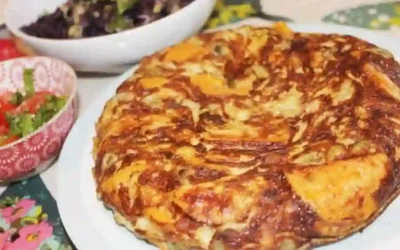
Spanish Tortilla With Sweet Potato, Feta And Broad Beans
originating in Persia, the ruling Moors brought the open-faced omelette to Spain, then combined it with potatoes from the Americas to create the Spanish tortilla. The question is whether to use onions?