
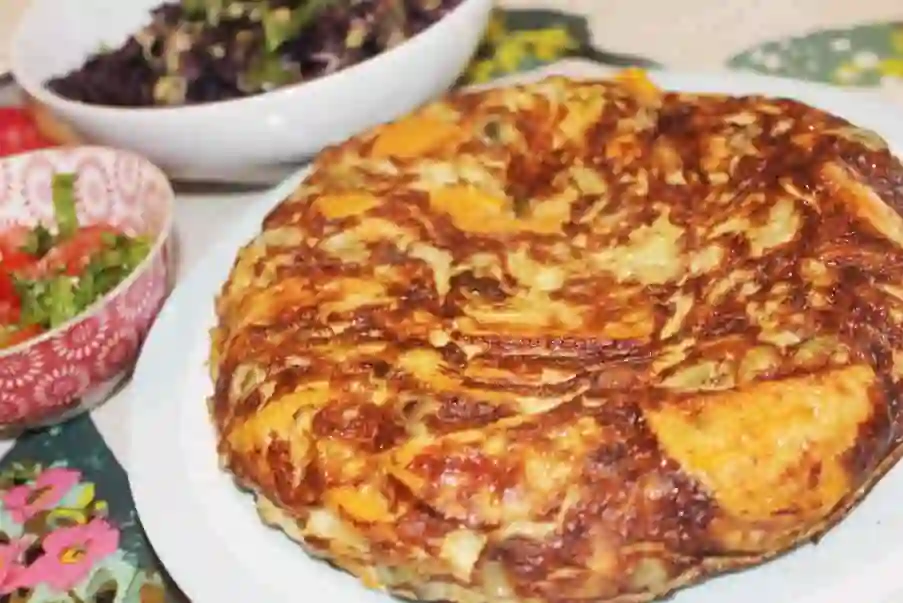
What Is A Spanish Tortilla?
The modern day tortilla likely originated from Persia, the open faced omelette was introduced to Spain by the ruling Moors, and later combined with potatoes from the Americas to create the Spanish tortilla
Attitudes towards tortillas vary in Spain. Purists will only use potatoes. These are quite thinly sliced and softened in copious oil without browning – they are, quite literally confit
Whether or not to include onions is another bone of contention. At the time of writing the “concebollistas” (onionists) have the upper hand as the last tortilla to win the coveted national tortilla prize contained onions. But this certain to change
On the other hand, I’ve eaten great – and authentic – carrot tortilla in tapas bars in Barcelona. Other varieties include aubergine and courgette. As a child my grandmother Juana used to make an amazing one with puréed cauliflower
Indeed, the Italians take an entirely casual approach to their open faced omelette (frittata), essentially using any combination of left-overs. And why not?!
Potatoes & Sweet Potatoes
I use sweet rather than standard potatoes because of their health properties as well as their sweetness and more complex flavour
Sweet potatoes, or Ipomea Batatas are a member of the morning glory family. Aside from their unique taste, they are higher in fibre than the potato, and though high in starch, up to 11% of this is resistant. Resistant starch cannot be broken down by the body and functions effectively as fibre. This extra fibre not only slows down glucose release into the blood, (ie lowers the glycaemic index), but also serves as a prebiotic to feed your friendly gut microbes
That’s not to say potatoes are bad for you. They’re richer in vitamin C, for example. And preparation strongly influences the glycaemic index of both: boiling lowers it, while frying and baking raises it. Curiously, scientists have discovered that super cooling any cooked starch increases resistant starch to significantly lower its glycaemic index. And this effect is maintained, or even amplified by re-heating!
Cooling And Freezing For Resistant Starch
Scientists have found that cooling starchy foods after cooking significantly increases the resistant starch content, lowering the glycaemic index and slowing the rate of glucose entry into the blood. Reheating maintains, or even increases the effect!
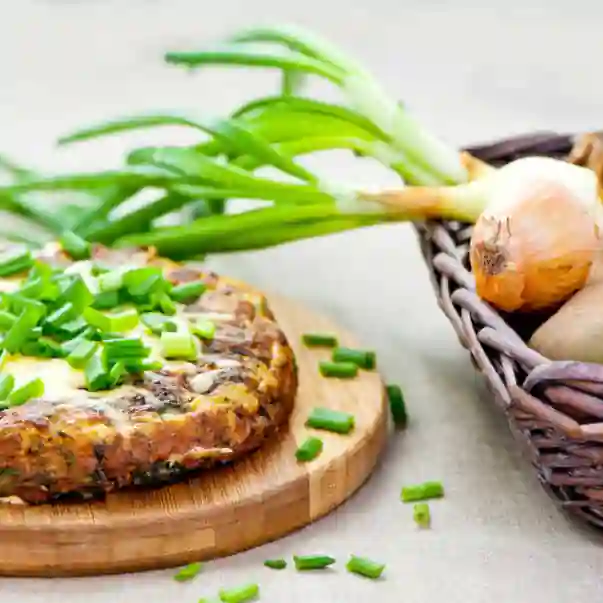
Guidelines For Making A Great Tortilla
The classic Spanish tortilla is rather thinner than the ones you find ready-made in shops and served in your typical restaurant. A good tortilla is juicy without being raw. This is much easier to achieve with the thinner variety. It also requires the freshest eggs
How Fresh Are My Eggs?
If you don’t want to take any chances with partially runny eggs, try the float test below. I never cook eggs without floating them first. And when cooking for guests, especially during a yoga retreat, I go so far as to pasteurize eggs that are going to end up less than hard-boiled
Float Test
This tests the freshness of your eggs
Immerse the raw eggs in cold water in a deep bowl. If the eggs remain horizontal they are at their freshest. Eggs that stand upright are older but still edible. Eggs that float off the bottom are old and must be discarded
Pasterurization
This methods destroys any bacteria contaminating your eggs. You’ll need a food thermometer
Immersing the eggs in a pan of water, heat to 60C and maintain that temperature on the lowest flame for 4-5 minutes
The classic Spanish tortilla is rather thinner than the ones you find ready-made in shops and served in your typical restaurant. A good tortilla is juicy without being raw. This is much easier to achieve with the thinner variety. It also requires the freshest eggs. Try the float test below. If you don’t want to take any chances with partially runny eggs, pasteurize them by immersing in a pan of water maintained at 60C for about 5 minutes
Immerse the raw eggs in cold water in a deep bowl. If the eggs remain horizontal they are at their freshest. Eggs that stand upright are older but still edible. eggs that float off the bottom are old and must be discarded
Use eggs sufficient to just cover the contents in the mixing bowl and the pan. While the onions and vegetables should be fully softened, cook your eggs to half to two thirds for a proper juicy tortilla
Use a well-seasoned stainless steel or non-stick pan with enough (olive) oil to cover the entire surface and hot enough for the egg mixture to immediately sizzle and form a base layer
Starting on a medium high heat, shake the pan back and forth until the cooked layer egg slides in one piece. You may need to use a spatula to help you. If the pan wasn’t hot enough you’ll have to be patient and wait for that bottom layer to form before you try to unstick the tortilla from the pan. Once you get the whole thing to slide, you’re good to go
For thinner tortillas turn the heat to medium and leave uncovered for a minutes or two before turning. Shake the pan frequently
For thicker tortillas turn the heat down to a minimum and cover with a lid to build up steam. Don’t forget to shake the pan
Turn the tortilla while there is still a bit of raw egg mixture on top. Use a plate to flip the tortilla, clean the pan as needed with some absorbent paper, add a small drizzle of oil, and slide your turned tortilla back into the pan. Tuck in the sides with a silicone or wooden spatula for a neater look
Cook for another minute or two, depending on the thickness, then flip onto a dish to cool slightly. And enjoy
Sweet Potato Tortilla With Broad Beans And Feta Cheese
Ingredients
- 1 large sweet potato
- 1 medium opnion
- 2-3 cloves garlic
- 1 cup broad beans fresh or frozen
- 5 eggs
- large pinch nutmeg
- mixed herbs of your choice fresh or dried
- salt and pepper to taste
- 200 g Feta cheese
- good oilive oil for frying
Instructions
- Finely chop and soften the onion in a little oil till translucent, about 5 minutes
- Add in finely chopped garlic and soften for a couple of minutes
- Peel and wash the sweet potato. cut it in half lengthways and slice each half into 1/2 centimetre slices
- cook in lightly slated water until tender but still firm
- cook the beans in water for 7-10 minutes, depending on their size
- in a large bowl beat the eggs with the chopped herbs and nutmeg
- add in all the slightly cooled pre-cooked ingredients, mixing thoroughly, and adjust the seasoning to your taste
- heat some oil in a fying pan and add half the tortilla mixture, shaking the pan to avoid sticking
- add the crumbled feta and cover with the remaining egg mixture. Keep shaking that pan
- once you see a fine layer of cooked egg at the base turn the heat down to low. Thicker tortillas will cook through better covered with a lid. Thinner tortillas won't need this and can be turned after as little as 2-3 minutes, depending on how runny you like your eggs
- To turn just flip it like a pancake, or play safe (highly recommended): place an upside-down plate over the top, flip the pan over and slide the tortilla back in from the plate. Remember the tortilla is very hot, so use a dinner plate which won't burn your hand
- I have a (well-seasoned) double tortilla pan, readily available in Spain, but believe me, people have been using the plate method successfully for centuries
- enjoy hot, cold or even warm
Check Our Other Plant Based Posts For More Delectable Spanish And Other World Dishes
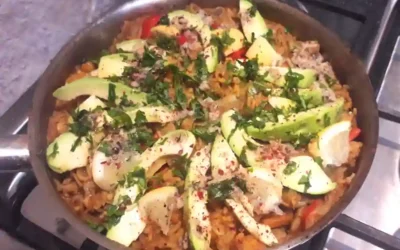
Vegan Paella Recipe – A La Mexicana
Following the introduction of rice by the Moors to the Valencia region, farmers and shepherds made humble sharing dishes of rice, meat and beans cooked in a wide shallow pan called a paella