
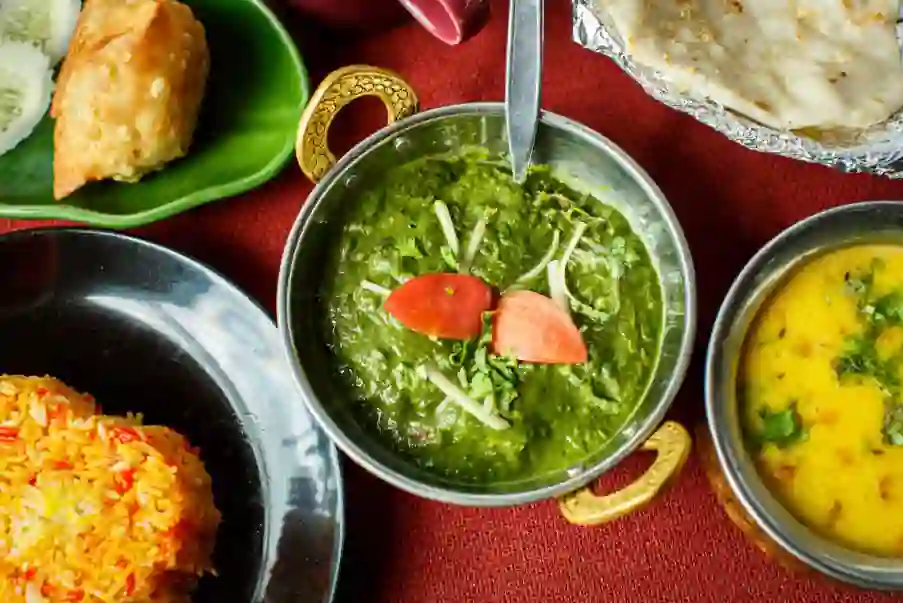
Not to be confused with the chickpea-flour based vegetable fritter, bhaji here refers a spiced vegetable dish, with or without sauce. Some argue that a bhaji is specifically a dry stir fried vegetable dish, and use sabzi as the generic name for an Indian style veggie dish. Even in India, there seems to be little consensus. But what's in a name? The recipes below are made from base curry gravy. It's as convenient as buying a curry sauce from a jar, but home made, and much, MUCH better
Base "Curry" Gravy?
In India, dishes containing sauce lean heavily on onions - for flavour, texture and depth, a process requiring long cooking of copious amounts onions down to practically nothing. This takes time and patience, which is where the curry gravy comes in. This article follows on from my previous post showing you how to prepare a restaurant style curry gravy that will speed up your weekday and Sunday-best curries to minutes rather than hours
Armed with you pre-made gravy, you can create any number of unique dishes. Temper whole spices in hot oil, soften some more onions, garlic, plus ginger and fresh green chillies. This is your tadhka. Add a couple of ladlefulls of curry gravy, 2-3 carefully selected powdered spices to complement of accentuate your base curry, maybe some chopped tomatoes, and simmer until the raw spice smell has gone. You now have your masala, ready fo the addition of vegetables. Add water, simmer to you taste, and you have a beautiful and distinct vegetable bhaji cooked in minutes
Matching Spices To Your Veg - A Very Rough Guide
The number one thing you'll want to avoid is serving multiple dishes all tasting the same. Our curry gravy base is there as base to unify the whole ensemble. Now it's time to give each dish some individuality
A good way to navigate working with individual spices is to follow a simple classification into sweet, sharp, earthy and fresh varieties. Of course, complex things like spices often refuse to be pigeon holed into neat categories, so take this with a pinch of salt. Feel free to experiment and create your own classifications and pairings
Here are a few simple examples
Sharp spices include
- black pepper
- pink pepper
- juniper berry
- brown and yellow mustard seeds
Sharp spices add a piquancy that enhances virtually any vegetable dish. I start the majority of my dishes with black mustard seeds popped in hot oil - be careful not to burn them or they'll turn bitter. A handful of fresh curry leaves or a couple of torn up bay leafs, a couple of green chillies and pinch of hing plus a couple of ladlefulls of curry gravy guarantee the success of any dish
Ground freshly toasted black pepper and coriander with a scant half teaspoon of turmeric plus curry gravy and a chopped tomato makes a wonderfully simple base for cauliflower. Sprinkle on a teaspoon of india's favourite spice blend, garam masala, some lemon juice and chopped fresh coriander leaf and you have a cauliflower bhaji fit for a Rani
Sweet spices include
- cinnamon
- clove
- nutmeg / mace
- cardammon
- anise
- fennel
All of these can be used whole, tempered in hot oil before your wet aromatics such as onions and garlic. Or powdered once the onions are fully cooked
Spinach loves a sweet spice to round off it's deep earthiness. You'll find traditional dishes in and beyond India pairing spinach with cinnamon or nutmeg
Sweet spices such as fennel and caraway will also enhance brassicas - cabbage, lettuce, broccoli. They lend sweetness to many savoury as well as sweet dishes, and sit naturally with root vegetables
Examples of earthy spices include
- cumin
- (indian) coriander seed
- dry powdered turmeric
This triad forms the basis of a great many - though by no means all - Indian dishes. As a rule of thumb, use two parts ground coriander with one part cumin. Dhana-Jeera may even be bought ready mixed in the correct proportion
I like to dry roast whole cumin, and sometimes coriander too. Why? Try it for yourself and have a whiff. Need I say more? While cumin can be simply ground in a rough mortar and pestle, coriander needs and electric spice grinder, so no one will blame you for using it powdered straight from the packet
Keep the amount of dry powdered turmeric to no more than half a teaspoon for four-servings. And make sure the raw, slightly medicinal smell is fully cooked out
Fresh / bright spices include
- (Moroccan) coriander seed
- lemon grass
- galangal root
- ginger root
- fresh turmeric root
Lemon grass, galangal and fresh turmeric root are associated with tropical climes and go wonderfully with coconut based dishes. Coconut milk doesn't always want curry gravy, but curry gravy will greatly enjoy some fresh or dry grated coconut, such as in a Lucknowi korma
Ginger adds piquancy to just about any dish
Moroccan coriander seed, with its orangy citrus notes, is fresher and softer than the Indian variety, and is wonderful sprinkled lightly toasted and ground over your finished dish
Savoury / umami
- hing / asafoetida
I put hing in its own category. Hing imparts a heady onion-garlic aroma with a savoury umami profile that enhances any savoury dish, and lifts deeper, earthy aromas to high heaven. Hing benefits from oil tempering. Bloom a pinch of it in hot oil, either at the start of the dish or at the end of cooking
Spices can also be mixed into traditional blends, either whole as with Bengali panch phoron (five spice), or ground as with warming garam masala, or savoury sambar powder. Remember: the only thing you can trust is your nose
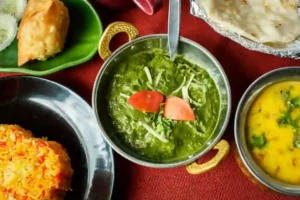
Saag Bhaji - Spiced Spinach
Ingredients
- 500 g frozen spinach, chopped or whole or 2 large bunches of fresh, leaves roughly chopped. stalks thinly sliced
- 1 medium onion thinly sliced
- 2 cloves garlic finely sliced
- 1-4 fresh green or red chillies, slit in 2 lenghtways or 1/2-1 tsp red chilli powder
- salt to taste
tempering
- 2 large pinches whole cumin seeds
- 1 pinch hing (asafoetida)
- 1 blade mace or a pinch of grated nutmeg
- 2 tbsp your favourite oil
Powdered Spices
- 7-8 black peppercorns coarsely ground
- 1/4 tsp turmeric powder
- 1 generous ladleful of pre-prepared curry gravy you can also substitute the curry gravy with a large finely chopped or grated tomato. In this case, a good teaspoon of coriander powder added with the other powdered spices won't go amiss
Instructions
- heat the oil in a karai or frying pan on medium heat to below the smoking point
- drop in a couple of cumin seeds. If they sizzle immediately add the rest together with the blade of mace
- let the spices release their aroma for 15-20 seconds taking care they don't burn
- add in the fresh chillies. Toss for 10 seconds
- finally add the hing, let it sizzle for just a few seconds and immediately add in the onions to stop the spices from browning
- when the onions are translucent add the garlic, cook for a minute
- now add the powdered spices, mixing them in with the onions and oil, and finally add the curry gravy (or tomato) and salt to your taste
- if you're using nutmeg rather than mace add it now
- simmer until the spinach is fully defrosted and cooked and most of the liquid has evaporated, adding a splash of water as needed to prevent sticking
- serve with a small dollop of yoghurt

Cauliflower Bhaji With Sweet Garden Peas
Ingredients
- 1 medium onion sliced
- 2 cloves garlic sliced or pounded in a mortar and pestle
- 1/2 inch piece ginger finely julienned or pounded with the garlic in a mortar and pestle
- 1-4 fresh red or green chillies cut in half lengthwise
- 1 medium cauliflower include and finely chop any tender young leaves
- 1 cup fresh or frozen peas
- 2 ladlefulls restaurant curry gravy
- 2 plum tomatoes skinned and coarsely chopped
Oil Tempering
- 2 tbsp of your favourite oil coconut or mustard oil adds an extra zing to this dish
- 1/2 tsp black mustard seeds
- 1/2 tsp cumin seeds
- 8-10 fresh or dry curry leaves (optional)
- 1 pinch hing
Powdered Spices
- 1/2 tsp turmeric powder
- 2 tsp coriander powder
- 1/2-1 tsp garam masala
- 1 tsp dried mango powder (amchoor) or zest and juice of half a lemon for garnish
- 1 handful chopped fresh coriander leaves for garnish
Instructions
- This step is optional, but you won't believe the difference! However, if, like me, you want to keep your oil intake down skip it, or reserve it for the most special of occasions
- heat some oil in a karai or large frying pan and very lightly brown the cauliflower florets in batches
- add oil to the pan to take it up to a couple of tablespoons and pop the mustard seeds for10-15 seconds. The oil needs to be below the smoking point, but be hot enough for the mustard to pop right away, otherwise they'll add an unwanted bitter note to the dish. Add a couple of seeds to pre-test the oil temperature
- add the curry leaves and green chillies until the leaves curl up and change colour, and finally sizzle the hing for just a couple of seconds
- add in the onions to stop the spices from burning and cook on a low-medium flame until translucent. Add the ginger and garlic and cook for about a minute
- add the curry gravy and all the powdered spices and cook until the raw taste has gone from the spices (especially the turmeric)
- add in the chunky tomatoes and soften for a minute or so
- finally add your lightly browned or raw cauliflower with half a cup of water and salt to taste
- cook until the cauliflower is half-way done to your taste, then add in your fresh or frozen peas. Add water as needed and, taking care not to break up the cauliflower, stir occasionally to stop the bhaji from sticking or burning
- adjust the water content as you go, so you're left with a bit of sauce
- finally, fold in the garam masala, a little at a time until it tastes the way you want it. If you omitted the mango powder take the dish off the flame and add in the juice and zest of half a lemon, or a bit more if you like, and some finely chopped coriander leaves
- This dish loves a roti or whole wheat chapati. If you're wheat free, try a finger millet (ragi) or sorghum roti
Coming up is a Bengali spiced aubergine bhaji using a five spice blend known as panch phoron (literally "5-spice")
Dishes from India's Bengal region like to use mustard - in the form of seeds, oil or the fresh green leaves. And panch phoron features black mustard seed as one of the five. The others are cumin, nigella - also known as black onion, fennel and fenugreek. You can usually find it without difficulty in Asian-Indian stores. If you want to have a go at mixing your own check our panch phoron recipe here
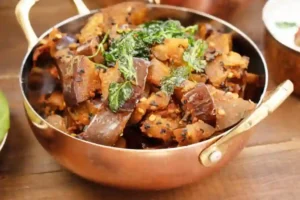
Bengali Aubergine Bhaji - With Indian Five-Spice
Ingredients
- 2 large aubergines cubed Peeled or unpeeled as your prefer
- 1 medium onion sliced
- 1 inch piece of ginger root pounded to a paste
- 1-2 fresh plum tomatoes finely chopped or grated or 1/2 can tomatoes
- 2 tbsp mustard or your favourite oil 1 tbsp un-toasted sesame oil and 1 tbsp neutral oil also works well here
- 1/2 tsp whole panch phoron (Indian 5-spice)
- 1 /2 tsp ground panch phoron
- 1.3 tsp ground turmeric powder
- red chilli powder to your taste
- 1 ladlefull restaurant curry paste
- chopped mint and - or coriander for garnish
Instructions
- add whole panch phoran to oil just hot enough for the spices to sizzle and pop whithout burning
- after a few seconds add the onions, coat them in the spiced oil and cook on a low heat until translucent, about 5 minutes
- add in the ginger paste and continue cooking for a further 10 minutes. Add a few drops of water every time the mixture looks dry or like it might stick or burn
- add the cubed aubergines and toss for a couple of minutes, coating them with the spiced oil while you gently brown them - you may need to add a drop more oil
- finally, add in a ladleful of curry gravy and the fresh or canned tomatoes, ground panch-phoran, chilli, turmeric and salt to taste
- simmer, covered with a well-fitting lid, until the aubergines are tender but hold their shape (start checking after about 20 minutes). Add a little water as needed
- adjust the seasoning and garnish with chopped coriander or mint
- serve with your favourite flatbread and a lentil dish
More Classic And Innovative Curry Dishes To Follow
Later we'll cook up more veggie bhajis from the ground up, without the gravy base. We'll cover authentic Indian in the great British restaurant style, with dishes such as Jalfrezi, Bhoona, the fiery Vindaloo and creamy and comforting Korma. We start with Dupiaza or Do-Pyaza ("onions twice"), a northern Indian dish with roots in Persia, where using a base gravy just won't do!
Check Our Other Plant Based Posts For More Delectable Indian And Other World Dishes

Onions Twice: Aubergine Do Pyaza Recipe
Slow-braised aubergines and sweet peppers in a rich onion-tomato gravy with cardammon, clove, cinnamon and black pepper are topped with caramelized onions
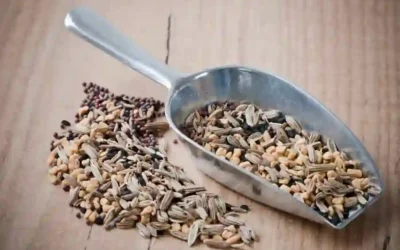
Panch Phoron – Indian 5 Spice To Elevate Any Dish
Indian cooks work mostly with individual spices, creating unique symphonies of flavour on the fly – with some notable exceptions, as with the spice blend Panch Phoron

Curry Gravy: Secrets Of The Great Restaurant Curry
A good curry takes time. Onions form the backbone, but need long cooking. Spices are the essence, but need time to develop. You can’t rush a good curry. But there is a way …