
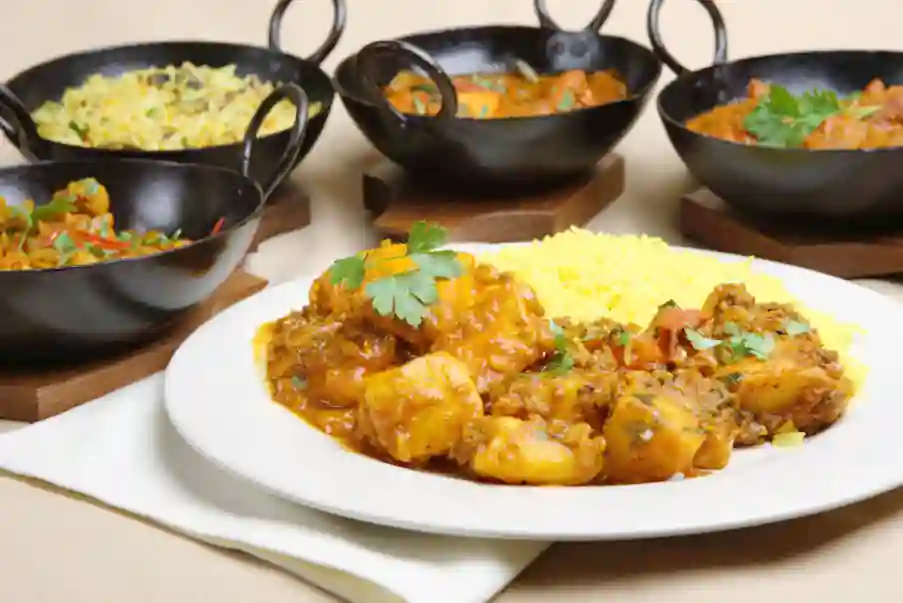
Possibly an anglicisation of Kari, a Tamil word meaning "with sauce" it's fairly common knowledge that "curry" is a mainly British invention. The vast Indian subcontinent has more culinary styles than probably the whole of Europe combined
Nevertheless, we can reasonably say that Indian food makes creative use of spices in the form of masalas, or spice blends, to the point of genius. Tempered in hot oil at the start of cooking, added powdered, singly or in premixed blends, as in the case of panch phoron, or sambar powder, added as a final aromatic top note in the form of a tadka, sagar or garam masala. Spices are layered in complex ways to create a symphony of flavour which defines a dish
The possibilities are so endless it's hard to know where to start. So why not start with what we know: that great Indo-British invention, the British restaurant curry? And how to make it at home the proper way
Hotel Style Curry Gravy
Two things I consistently noticed in the early days of cooking curries:
I couldn't quite match that unctous richness of the dishes I enjoyed in my favourite curry houses until my friend Shameem, a Londoner of Pakistani extraction, shared with me the importance of onions in northern Indian cuisines
The second thing I noticed on returning to the UK after my first Indian trip: British restaurant curries are really quite oily ...
The food I encountered in (northern) India had all that richness and spice I had come to love, but it was light. The take-away? (pun intended): oil or ghee is an important element in northern Indian dishes, but you can get all that flavour and richness with quite modest amounts of oil
" provided you know how to work with the onions and spices the proper way
Onions And Spice: The Body And Soul Of Curry
British curries are based on the Indian subcontinent's northern style of cooking, particularly that from the Punjab and Bangladesh. Dishes from these regions base their qualities not just on spices but also onions. What gives these “curries” their sweetness? Onions. Their thickness? Onions. That defining taste? Spices, of course. But also onions
When making curry from scratch at home the first thing Shams taught me is to prepare onions. Lot of onions. One medium sized onion per person at the very least. Preferably nore
And, most importantly, onions need to be cooked down in oil or ghee, with spices, to almost nothing. That is the bedrock of good curry
Naturally, this this takes time. 20 minutes will pass before the onions are ready for the addition of garlic, ginger and maybe some fresh green chillies. They'll want to be cooked for a another 10 minutes. And you haven't even started to cook your powdered spices
Powdered spices need cooking until their raw smell has given way to that hard to describe, but oh so familiar curry aroma. This takes time. 20 minutes? Probably longer. Curry takes time. If you don't cook the onions and spices to the right level your curry will taste raw. Your guests will notice. And so will you
It's little wonder, then, that busy restaurants and hotels use a pre-prepared curry gravy. Having dealt with the onions and basic spices they have a platform from which to quickly create any number of individual dishes with the addition on a couple of spices here, or few capsicums there. Vinegar and more chilli for Vindaloo. Coconut, cashew and poppy seed cream with ground coriander and cardamon for Lucknowi Korma. The sky is the limit
Curry gravy can be just as useful at home. While I'm happy to make Indian food for myself and partner from the ground up when we have a whole Sunday to ourselves, when busy running a yoga retreat a base curry gravy lets us transform a few simple vegetables into any number of delectable veggie bhajis, sabzis, and yes, "curries", in a mere twinkling
Restaurant Curry Base-Gravy
Ingredients
- 6 peeled and sliced onions
- 1 carrot
- 1/4 small white cabbage
- 1 red, green or yellow pepper
- 2-4 green chilies
- 2 tbs garlic-ginger paste (mash equal quantities of ginger and garlic with a pinch of salt in a mortar and pestle)
- 1 small bunch fresh coriander (leaf, stalk & root) chopped
- 4 tbsp neutral oil
Spices
- 1/2 tsp turmeric powder
- 1/2 tsp whole or powdered fenugreek
- 1 tsp cumin powder
- 1 tsp red chili powder
- 1 tsp salt
- 2 tsp coriander powder
- 1 med can tomatoes or 4-5 fresh tomatoes roughly chopped
Instructions
Create the Onion Magic
- Warm the oil in a frying pan or pot
- Add the onions, sliced carrot, cabbage, bell-pepper, coriander, green chili, ginger-garlic paste and the salt
- Stir the onions to coat everything in the oil, then, when the onions are slightly translucent, cover a well-fitting lid and simmer over a very low flame for 30+ minutes, stirring occasionally and adding a splash of water as needed to stop the onions from sticking and burning
- Even when the onions feel soft you have to rely on your nose to tell you when the onions are ready. If you've eaten curry you'll know the smell when it happens
Add The Spices
- Add all the dry spices and the tomatoes. Cook for a further 30 mins until the oil has separated from the mixture. This separation is the best indication that your spices are properly tempered
- Add a cup-full of cold water, then blend to create a smooth sauce, adding more water as needed to achieve a creamy consistency
- Use as a base for your favourite restaurant curries
One Base Gravy, Infinite Curries
Now that you have your base gravy you can create no end of traditional and bespoke Northern Curry dishes
Lightly sauté some onions, ginger and garlic, with or without fresh green chilli, add a couple of ladlefuls of base gravy and additional whole or powdered spices of you choice to create endless variations
- Temper whole spices such as black mustard and cumin in hot oil before adding the onions
- Add a tarka of oil tempered spices at the end of cooking for an aromatic top note - a must for lentil and bean dishes
We'll look at how to turn this basic starter gravy into named traditional dishes and off-the-cuff personal creations in later posts. See you soon
Check Our Other Plant Based Posts For More Delectable Indian And Other World Dishes
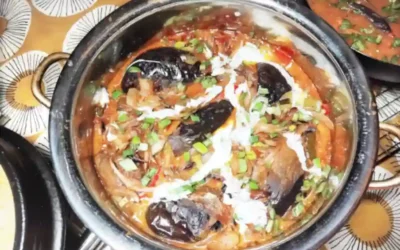
Onions Twice: Aubergine Do Pyaza Recipe
Slow-braised aubergines and sweet peppers in a rich onion-tomato gravy with cardammon, clove, cinnamon and black pepper are topped with caramelized onions
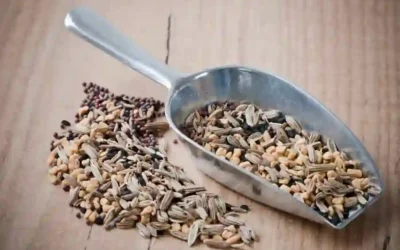
Panch Phoron – Indian 5 Spice To Elevate Any Dish
Indian cooks work mostly with individual spices, creating unique symphonies of flavour on the fly – with some notable exceptions, as with the spice blend Panch Phoron
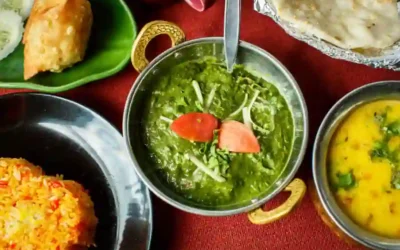
From Base Gravy To Vegetable Bhajis – 3 Veggie Classics
Armed with your restaurant curry gravy, rich with long cooked onions and aromatic spices, you’ll have these three classics ready in a jiffy