
Discover Extremadura
Spain's Best Kept Secret
Visit us in Extremadura, home of the Spanish Yoga Retreat. A rugged land of snow-capped mountains, ancient forests, and endless skies, Extremadura Spain remains one of Spain's most natural regions. And one of its best guarded secrets
Sparsely populated by humans, Extremadura is a natural paradise for bird-watchers, hikers, and lovers of the outdoors. Extremadura is also a swimmer's paradise, boasting Spain's longest stretch of fresh-water beach
Discover a rich legacy of ancient cities and villages that time forgot, bearing witness to waves of Roman, Visigoth, Muslim, Jewish and Christian settlement. And enjoy nature at its most pristine
For those of you able to make time, this article will guide you through some of the region's most unique experiences. We share our best recommendations, combined with local knowledge, to help you get the most from this magical corner of Spain
Extremadura’s Cultural Heritage
Extremadura has no end of places where you can soak in the region's unique culture, history and art. The UNESCO World Heritage cities of Mérida, Cáceres and Guadalupe form Extremadura's golden triangle, and offer a cultural wealth unmatched in the region
Mérida
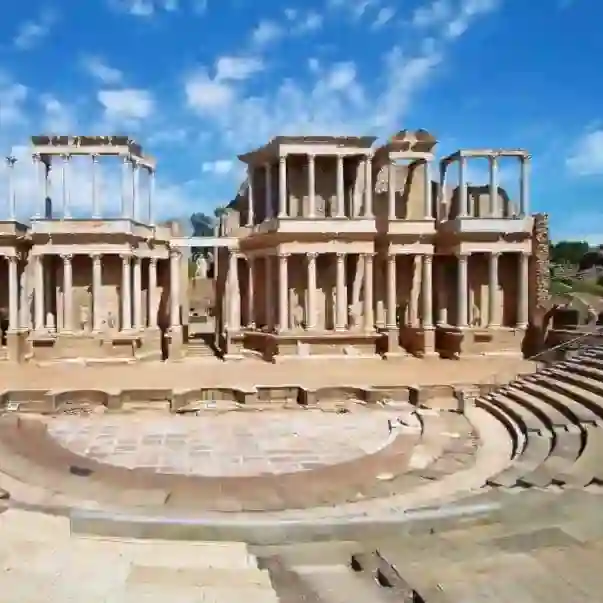
Ancient capital of the Roman province of Lusitania, encompassing Extremadura and parts of Portugal, Augusta Emérita preserves an ensemble of Roman monuments without equal in Spain
Modern Mérida retains its power base as the seat of government of the Autonomous Community Of Extremadura
UNESCO World Heritage since 1993, Mérida’s archeological treasures include a Roman theatre and amphitheatre, a large circus, an extensive water supply system including an aqueduct, and a still intact bridge spanning the Guadiana river. Wandering through the City’s streets you will suddenly chance upon the many temples and shrines dedicated to the gods and goddesses of ancient Rome
If meandering through the ancient sites to marvel at their beauty and soak in their atmosphere is not enough, you can learn more about the history of Roman Spain in Merida’s National Museum Of Roman Art. Or take in a show at the city’s annual summer festival of classical theatre staged in the old Roman theatre
Vegetarian Mérida
Veggie food is not easy to come by in Extremadura, nor indeed in the rest Spain, so if you adhere to a plant-based diet you’ll be pleased to hear that Mérida has a fully fledged and quite excellent family-run vegetarian restaurant
Shangri La, Calle Sagasta, 21, 06800
Tel +34636752837
There And Back Again
AvanzaBus runs regular bus services from Trujillo to Badajoz, via Mérida, making for an easy day trip. Journey times are a little under an hour
Cáceres
Just 46km (28.6 miles) due west of Trujillo the provincial capital of Cáceres, has a wealth of cultural offerings ranging from the Helga De Alvear modern art gallery to the yearly music festival WOMAD
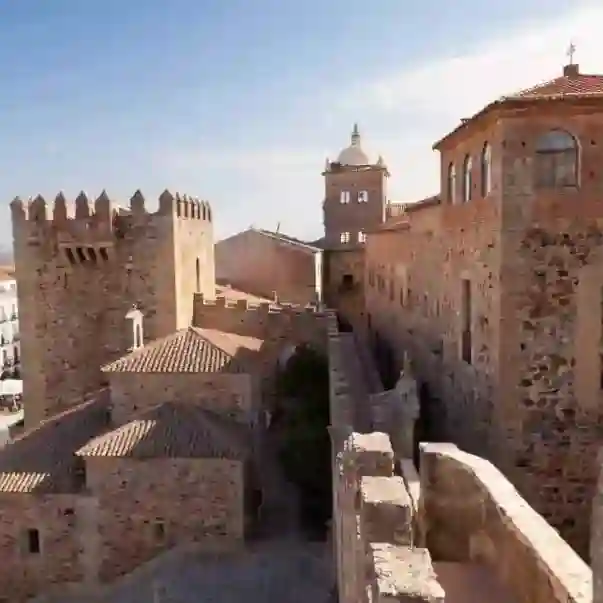
The city's historic centre has enjoyed UNESCO World Heritage status since 1986
Cáceres has an architectural heritage well worth a visit. From the Plaza Mayor pass through the the 18th-century Arco de la Estrella into the old medieval city, with its narrow streets filled with churches, palaces, mansions and fortified towers spanning and array of architectural periods from Romanesque to Islamic, Gothic, and Renaissance
The City’s Moorish walls also contain the second largest water cistern in the world
Just outside the old city, the Fundación Helga De Alvear (Calle Pizarro, 8) curates an excellent collection of modern and contemporary works ranging from Picasso to Ai Weiwei
Travel
Avanzabus run multiple daily services from Trujillo to Cáceres central bus station. Journey times are around 40 minutes
Guadalupe
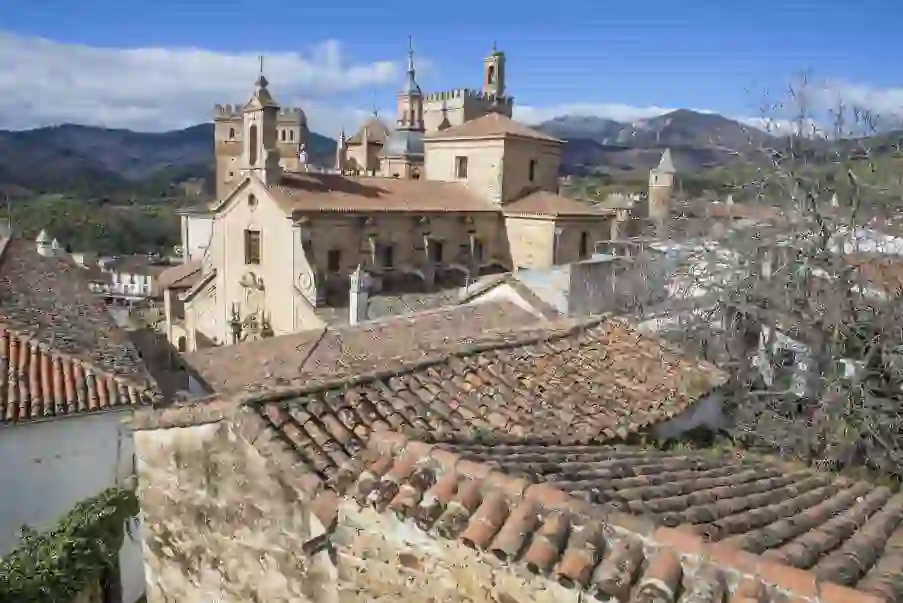
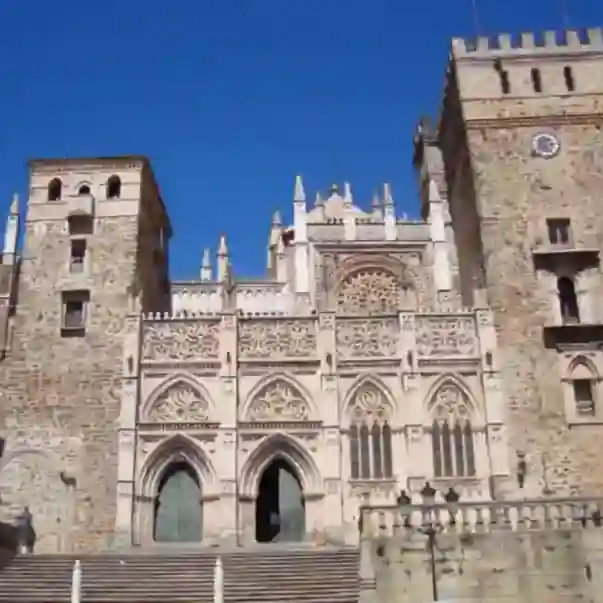
Nestled in one of the least accessible corners of Extremadura, deep in the mountainous terrain of the Villuercas-Ibores-Jara Geopark, the exquisitely picturesque village of Guadalupe is dominated by the Real Monasterio and great Basilica dedicated to Our Lady Of Guadalupe, patron saint of Extremadura and all of Latin America
The Real Monasterio houses important works from Spanish masters, including Velazquez, El Greco and Zurbarán, often dubbed the Caravaggio of Extremadura
A multitude of devotees congregates every year in September, walking on their knees to pay homage to Our Lady Of Guadalupe, patron saint of Extremadura, and crowned queen of the Spanish speaking world in 1928
The appearance of Guadalupe in the guise of an indigenous Mexican woman to the peasant Juan Diego in mount Tepeyac, Mexico city, echoes the vital historical and cultural connection between Extremadura and Latin America
Getting There
Despite its World Heritage Status, Guadalupe is poorly served by public transport, with just two daily bus service from Cáceres, stopping at Trujillo. Sadly, the return bus leaves before the outward bus arrives, making an overnight stay obligatory
Nevertheless, Guadalupe is a must-see. Most of our people hire a car for the 1 hour, 93km drive to this pilgrimage to the end of the world
It's also possible to share a taxi (currently around €80-90 one way)
Other Places Of Cultural Interest
Cradle Of Explorers And Conquistadors
History buffs may want to learn more about the impact of Extremadura in the founding of modern-day Latin America. Known as the cradle of conquistadors, Extremadura is also cradle to explorers and other "men" of relative peace. Though the origins of the individual historical characters span the region, two places stand out:
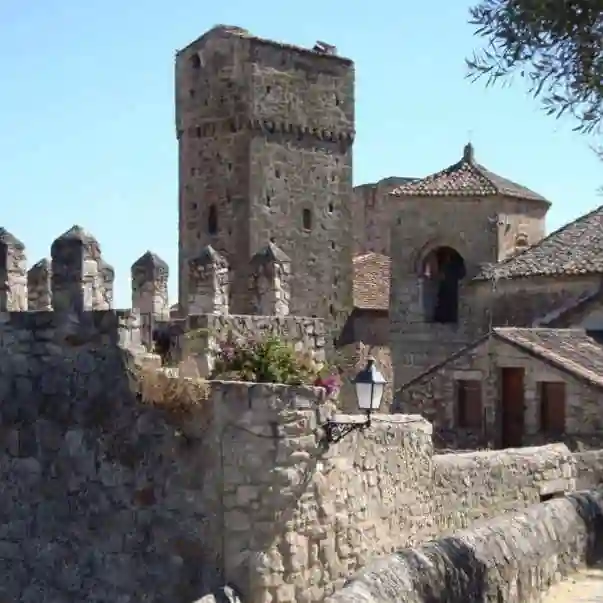
Trujillo
Boasting Spain’s most theatrical town square and an old medieval city crowned by 9th century Moorish citadel, Trujillo has been continously inhabited for more than 2000 years
Settled by Celts, Turaca gave way to the Roman Turgalium, Torgielo under Muslim rule, and Trujillo under the Christians
Trujillo was the birth place of Francisco Pizarro, conqueror of the Inca and founder of Lima, Peru, as well as Francisco Orellana, first European explorer of the Amazon and others
The equestrian statue of Pizarro in the town square bears witness to this episode in Spanish and American history. Curiously the state, forged by Charles Rumsey in 1925, was originally of Hernan Cortés, conqueror of the Aztecs in central México. When the Mexican's rejected it, Ramsay presented it to Perú and later Spain and as Pizarro. The bronzes now stand in Trujillo and Lima, with a third in Buffalo NY State
Spain's First Capital City
The treaty marrying the kingdoms of Castille and Aragon to form the modern nation of Spain was signed here, making Trujillo Spain's very first capital city
Home of the Spanish Yoga Retreat, you can read more about Trujillo here
Medellín
Also of Roman origin, the town of Medellín in Badajoz provice is the birthplace of another notorious figure, Hernán Cortés, conqueror of the Aztec empire of Mexico
Despite the ravages of time and wars, Medellin preserves a worthy architectural ensemble, notably a Roman theatre, medieval castle, and a 17th century bridge over the Guadiana river. A Centro De Interpretación details the area’s historical and geographical features
Extremadura's National Parks
Exploring Spain's Natural Paradise
Spain's least populous and also one of its most natural regions, Extremadura is a pristine land of mountains, forests and lakes brimming with wildlife. A walker's and bird-watcher's paradise, Extremadura also boasts an estimated 1500km of fresh-water beach, making it the country's longest
Below is a selection of some of our favourite wild spaces, representing just a fraction of Extremadura's offerings
Monfragüe Biosphere Reserve
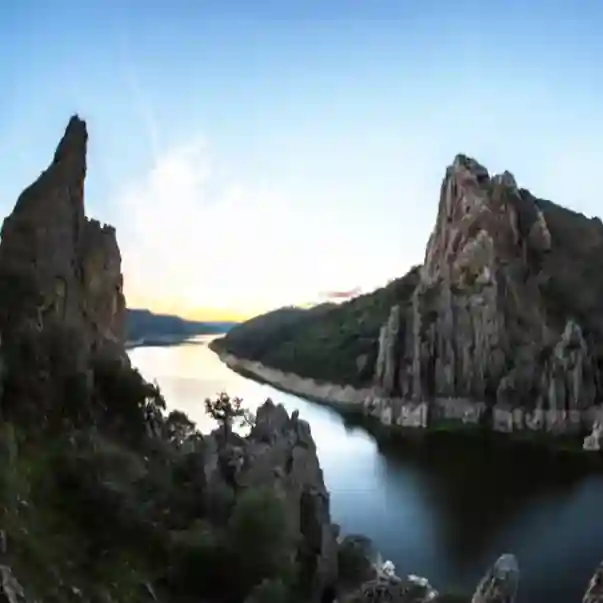
This most natural paradise, covering 18,000 hectares of towering cliffs and pristine lichen-drenched forests straddling the rivers Tagus and Tiétar offers you nature at its most pristine
Named Mons Fragorum, the fragrant mount, by the Romans, Monfragüe is a haven for birds and bird-watchers alike
In addition to the 340 species, including the black stork, settling here in each yearly cycle, the park is home to permanent colonies of black Egyptian vultures and Spanish imperial eagles. Deer and wild boar abound, while the more elusive Iberian lynx is more likely to spot you than you it
Numerous well marked hiking trails take you through the park’s visual splendours. Monfragüe is a favourite location for our yoga and walking retreats. Our walks take us from the Fuente Del Francés up to Monfragüe castle for aerial views of the park. You won’t need binoculars to see the resident black vultures hovering at eye level, but they’ll help you spot the park's less conspicuous, smaller residents
The park’s main setting off point, Villareal De San Carlos, offers rural accommodation in traditional bungalows as well as two bar-restaurants and an information centre
Getting There
If you’re not joining us for yoga and walking, Emiz runs buses from Trujillo to Plasencia stopping at Villareal De San Carlos on Mondays and Fridays mornings, returning to Trujillo around 3pm
Villuercas-Ibores-Jara Geopark
Contiguous with Monfragüe and right on Trujillo’s doorstep is the mountainous region of Villuercas-Ibores-Jara. Designated geo-park by UNESCO in 2011 the park is a symbol of sustainable tourism
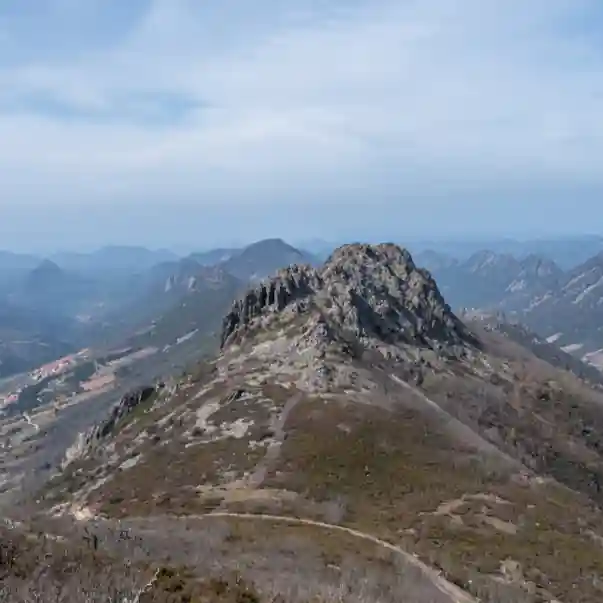
It may come as a bit of a surprise, therefore, to find the Swiss-run restaurant Algo Así (something like that), serving a multi-course taster menu of primarily home-grown fare
Vegetarian options are available. Advance booking essential:
Tel +34 608 70 36 73
Getting There
Walking: Ruta Isabel La Católica
The route follows the old Ruta Isabel La Católica joining Cañamero to Guadalupe. It’s a three stage event, each stage a week apart and covering around one third of the trajectory, with a return to Trujillo by privately hired bus. You can join all or any of the stages individually
The final stage is set to coincide with Guadalupe’s yearly homage to its patron saint. The most faithful arrive on their knees. You'll be forgiven for finishing the route on footan>
Walking In Extremadura
Spain's Natural Paradise
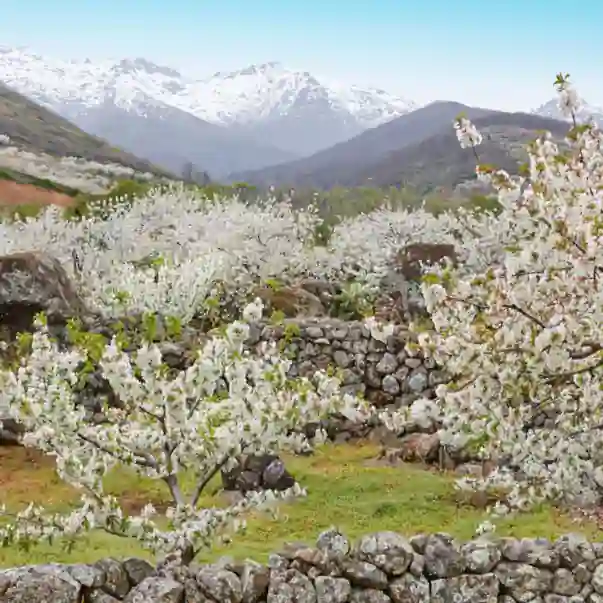

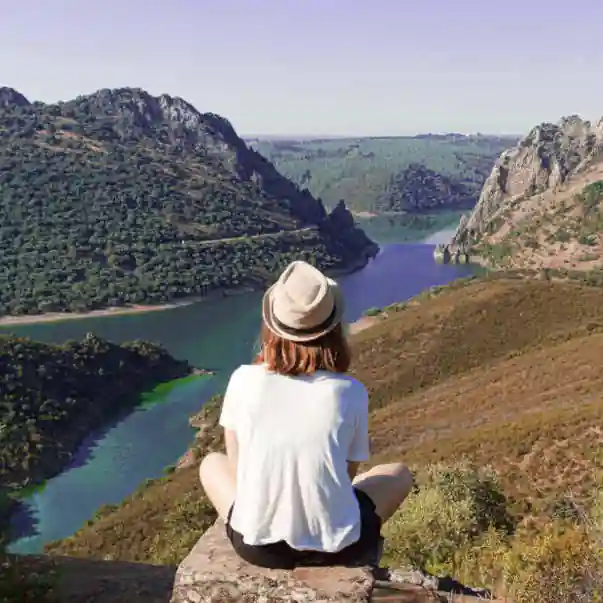
We've already mentioned the Isabel La Católica route to Guadalupe. Other areas popular with walkers for their outstanding beauty include
Valle Del Jerte / La Vera
Eeurope's largest producer and exporter of cherries, the Jerte valley produces a spectacular springtime display of blossom covering whole mountain sides.
La Vera is home to smoky paprika. It's also the site of the beautiful Yuste Monastery where king Charles I spent an extended period
Monfragüe and Villuercas-Ibores-Jara National parks
These contiguous national parks (see above) offer nature at its most untamed. Visit Monfragüe's Gypsy's leap, with its resident colony of black vultures stradling the river Tagus, or take the hiking trail to Monfragüe Castle for eye-level encounters with vultures and panoramic views of the park
Or walk to the 430m (1400ft) Risco Villuercas, the Geopark's highest peak for panoramic views of this achingly beautiful landscape
Pico San Gregorio
Just 18km south of Trujillo, this 1200 feet rocky outcrop is one of our favourite walks in the area. The moderately easy and well marked return walk departs from the village of Santa Cruz De La Sierra, ascending gradually through a multitude of ancient sacred sites, including the remnants of a Moorish citadel and a sacred burial ground with anthropomorphic tombs at the mountain's summit
Sierra De Gata and Las Hurdes:
This easternmost stretch of the Spanish central range is Extremadura at its most rustic and traditional. Villages that time forgot preserve ancient traditions and languages lost to other parts of Extremadura
Pilgrims Way
Extremadura also constitues part of the so-called Southern Camino to the Sanctuary of Santiago De compostela. Less well known among the pilgrim community, this is an ideal route if you who enjoy tranquility, nature and solitary landscapes
The route joins Huelva, in Andalucia, with Zafra in southern Extremadura. Here it joins the Via De La Plata (Silver Way), an ancient Roman road transporting silver from the northern mines to the southern port of Seville
An alternative third pilgrims’ way has recently received some attention. Another historical Roman road, the Via De La Estrella (Starry Way) stretches west from Cáceres city via Alcántara to Segura on the Spanish-Portuguese border, within the International Tagus Biosphere Reserve. From here the Portuguese Via da Estrela takes the walker through Braga before crossing back into Spain for the final stretch to Santiago
For independent walking in Extremadura check WikiLoc, a website full of routes worldwide compiled by the people who’ve walked the walk
Birding, Wild Swimming & More
Extremadura offers unparalleled opportunities for bird-watching with up to 367 resident and migratory bird species
Extremadura's dark night skies also offer top opportunities for star gazing. Bring your binoculars or pocket telescope, or join a guided star gazing tour for a fuller appreciation of the night sky
Wild Swimming
With an estimated 1500km of fresh-water beach, Extremadura offers the visitor the greatest fresh water swimming experience in Spain. From the rushing gargantas of La Vera and Jerte valleys, to the vast Embalse De Orellana in Badajoz province, and the many lakes dotting Villuercas-Ibores, you'll find no difficulty in taking a refreshing dip
From culture and history to immersion in nature, wild swimming and just kicking with a good book or a glass of something very cold, there's so much to do, see and enjoy in Extremadura. Come and discover the many facets of Spain's road less traveled
Rest And De-Stress – The Vagus Nerve And Yoga
While most of us are familiar with the body’s stress response, rest-and-digest has only more recently received due attention. Organized centrally, rest and digest is mediated by the Vagus
Yoga for Health: 5 Exercises For Dysfunctional Breathing
Breath is intimately linked to how you feel. Learn 5 practical strategies for regulating your breath for health and wellbeing
Breathing Pattern Disorder: How To Recognize And Manage It
Breathing too much carries a health warning: how you breathe affects all of you, from digestive function to emotional health
Contact Manuel