
Cranial Osteopathy
A Whole Body Therapy
Cranial osteopathy is an extremely gentle, minimally invasive method of delivering osteopathic treatment. Originally developed for working with the cranium, or skull, modern cranial osteopathy is a holistic whole-body therapy
Far from being a distinct form of treatment, cranial osteopathy adheres closely to the basic principles of osteopathic medicine. It can be applied to all conditions treatable with osteopathy, from back pain and migraine to managing stress and anxiety
The subtlety of cranial treatment renders it effectively invisible. And rather than offer our patients lengthy explanations we let the results speak for themselves. However, if you’re wondering what’s behind it all, here’s your chance to peep under the bonnet
In this article we’ll explore cranial osteopathy, from basic principles and treatment approaches to dispelling some common myths. And of course we’ll look at major ways it can help you get fitter, healthier and happier
What Do Cranial Osteopaths Do?
A well known British actor visited my practice a few years back, declaring in true thespian fashion:
I was never sure what he made of my explanations, but he got better, so all’s well that …
Cranial osteopaths can adopt a variety of working models. However, they all share one trait. To the observer it would appear we’re doing – nothing
But this is a very special kind of nothing
What Is Osteopathy?
Cranial osteopathy will make better sense in the context of osteopathic medicine, of which it is an extension
Osteopathy was the brainchild of the 19th Century American physician Andrew Tailor Still. It is a total healthcare system emphasizing the importance of healthy structure for healthy function
Following the tragic loss of three of his daughters to meningitis, Dr Still sought an alternative approach to healing
He reasoned that the body is equipped with all the pharmaceutical agents it needs to live and thrive. When internal or external factors upset the body’s equilibrium, the physician need introduce nothing external. Instead she should help the body access its own medicine cupboard to return to health
Central to his thinking was the importance of structure for the body’s myriad internal activities. Altered structure disturbs vital function, and disturbed function is reflected in the body’s structure
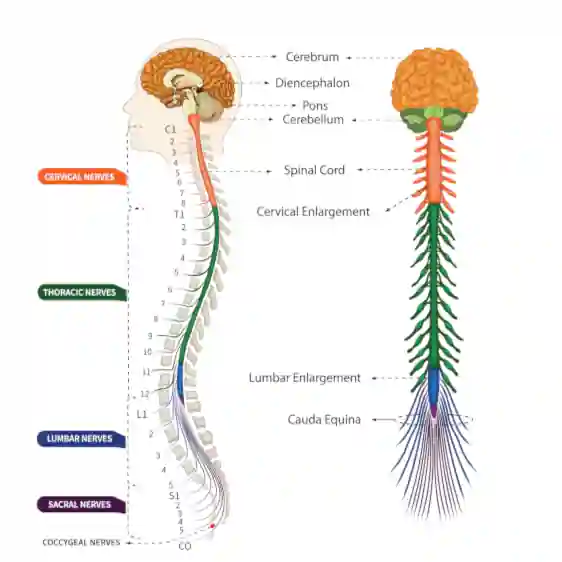
Though structure as a whole is important, Still emphasized the vertebral column with its 31 pairs of spinal nerves. Thus, the spine becomes a vital link between the musculoskeletal system and the proper functioning of the vital organs
Osteopathy In The Cranial Field
The 31 pairs of spinal nerves are essential for the function of the organs. But what of the 12 pairs of nerves entering and leaving the cranium?
Enter W G Sutherland, a student Dr Still. Wishing to plug this “gap” in osteopathic practice he set about studying the intricate structure of the cranial bones. Dogma has it that the skull is fixed, and does not move. However, Sutherland argued that a joint’s primary purpose is to allow movement
While studying the cranium Sutherland noted that
The question of whether or not the cranial bones can “move” rages on. It’s a favourite objection for detractors of cranial osteopathy. But to most practitioners the question is largely redundant. Rhythmic motion is evident everywhere, even there are no joints at all! And Dr Sutherland’s real gift to us was not cranial mobility, but the discovery of involuntary motion
Modern Cranial Osteopathy:
Core Principles
Involuntary Motion
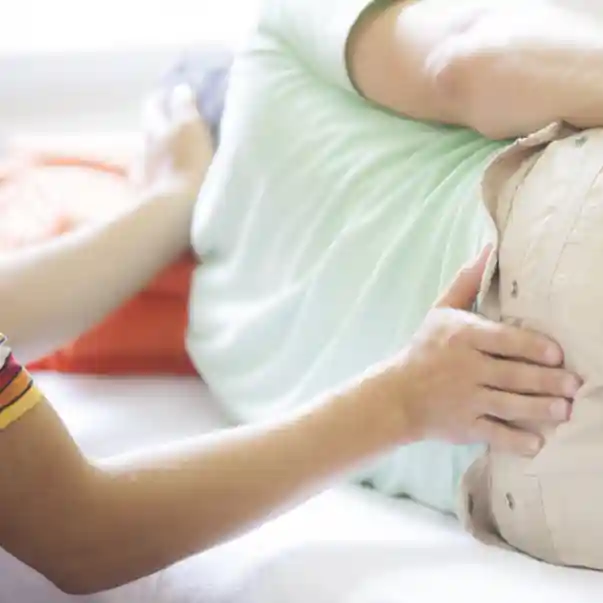
Cranial osteopaths interact with a body-wide rhythmic motion which can be felt by the listening hand
First detected in the head, involuntary motion started life as a means for working with the cranial mechanics
However, involuntary motion is everywhere in the body, allowing modern practitioners to work with all body regions
Primary Respiratory Mechanism
Sutherland named involuntary motion the primary respiratory mechanism (PRM)
In physiology, the breathing of the lungs is known as ventilation, while respiration is reserved for energy release within the cells. But for Sutherland, primary respiration was neither, referring instead to a fundamental “breathing” of the tissues themselves
From Cranial to Cranio-Sacral
Sutherland’s Early Model
Sutherland set up his initial cranio-sacral model. It ran from the cranium at the top, to the sacrum at the base, and positioned the cranium as the driving force
Based as it was on cranial mobility, the model has proved contentious. While modern cranial therapists have moved on, the model persists. Mainly, it seems, to attract criticism from its detractors. Curiously, it is also taught today at some educational establishments
For this reason, I include it here for your reference
1: The Inherent Motility of the Central Nervous System (CNS)
Not surprisingly no motility has been demonstrated in the CNS. Physiologically, it is muscle that has motility, though there’s nothing to show that involuntary motion is linked with muscle action either
Clinically, ALL tissues and body fluids express the tide – the CNS included. This means that we can contact and work with involuntary motion anywhere in the body. Common points of contact are
- the feet
- the sacrum
- the upper back and chest
- the shoulders
- the head
- anywhere expressing dysfunction
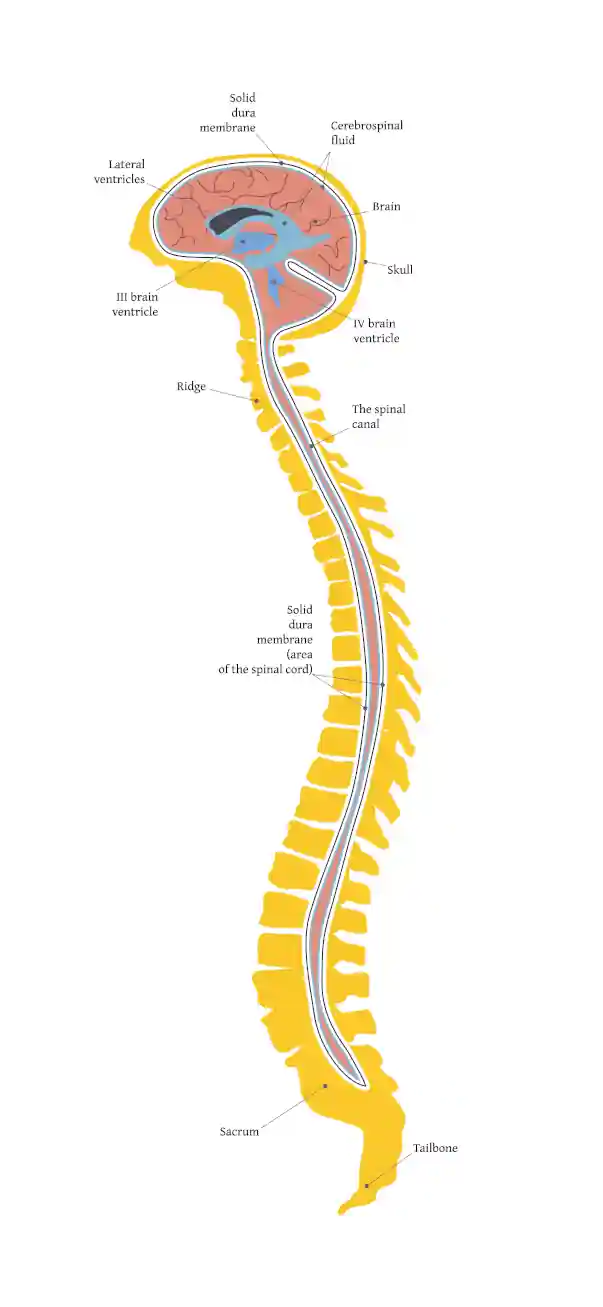
2: The Fluctuation of the Cerebrospinal Fluid (CSF):
CSF bathes the brain and spinal cord from within and without. Long thought to merely provide shock absorbency, CSF is now known to play an active role in central nervous system nutrition, waste clearance and immune functions
If CSF does not circulate linearly like blood, neither does it fluctuate to the tune of Sutherland’s involuntary motion. CSF fluctuation has been show to vary depending on factors like the sleep-wake cycle, cerebral blood flow and volume and others
Clinically cranial osteopaths can orientate to the tide-like fluctuations in body fluid as a whole. Though it’s unclear whether we are connecting with body fluids or a fluid-like quality within the involuntary motion, a client with back pain asked me if I might be able to also help his ankle swelling:
Contacting the fluids from the feet to galvanize lymphatic and extracellular fluid drainage, the patient later put on his shoes, exclaiming
3: The Mobility of the Reciprocal Tension Membrane (RTM)
The RTM refers to due Dura Mater (lit: “tough mother”), the outermost of a triple layered membrane lining the brain and spinal cord. Tough and fibrous, the dura is naturally under tension, so that a force acting on any part instantly changes the tension in the whole system
Modern research into fascia confirms and expands on this. Tensional continuity is present throughout the body in the continuous connective tissue web (fascia) permeating and enveloping every tissue and organ. Thus the whole body is able accommodate and disperse local alterations in function
This phenomenon of tensional continuity is also referred to as biotensegrity, a subject of great therapeutic relevance which we will explore in a later post
4: The Articular Mobility of the Cranial Bones
Sutherland’s concept of cranial mobility is among his most contentious. External sources are fixate on cranial mobility being the central argument for cranial osteopathy. Since no motion has been demonstrated they therefore reject the whole thesis. But for cranial osteopaths this is not so at all
Cranial osteopaths feel motion in the whole body, making the concept of cranial mobility redundant. It gets worse: involuntary motion doesn’t even need joints!
Motion can be felt where once-moving parts are known to have fused. For example, the sacrum at the spinal base is made up of five vertebrae in childhood, but fuses into a single bone when growth is complete
These restrictions can be mobilized using cranial techniques to restore function and reduce pain irrespective of the patient’s age
Motion can even be felt within the substance of bones. Long bones such as the shin and thigh, for example, not only rotate during their motion cycle, they also shorten and lengthen
Though we think of bones as being hard, they are in fact rich in a soft-tissue matrix composed of collagen and other structural proteins, to afford them flexibility and resilience. Perhaps this helps explain why bones are felt to change shape during the primary respiratory cycle?
5: The Involuntary Mobility of the Sacrum between the Ilia (pelvic bones)
Sutherland acknowledges motion extends beyond the skull, with the reciprocal tension membrane (Dura) connecting the cranium to sacrum, However he qualifies this with the term “involuntary”, suggesting the cranium is the engine which passively moves the sacrum via their membranous link
To date, it seems only the hand can confirm the presence of involuntary motion. Otherwise, there is no external verification of its existence. Further, primary breathing has a particular quality which I can best describe using my own experience
Close Encounters Of The Cranial Kind
Or How Cranial Osteopathy Nearly Blew My Head Off
I first came accross involuntary motion as an osteopathic student back in the 80’s. A patient with neck pain was too vulnerable for standard manipulation, and we called in a cranial oriented tutor. Describing his approach, he proceeded to lightly rest his hands on the patient
The mystery only deepened – or clarified – when, later that day we were invited for a follow-up practical. Slightly daunted, but guided by my earlier experience, I took myself to “the place”, contacted my fellow student’s head and …
Looking at my hands there was nothing to see. Following that experience I became convinced that, whatever its physical expression, involuntary motion must be an energetic phenomenon
What Drives Involuntary Motion?
If the “cranial” hypothesis cannot convincingly explain involuntary motion, how else might we account for it?
I’m fully aware that in the absence of rational explanations, we humans are wont to take solace in esoteric solutions. However, for myself, the “energy” hypothesis was not borne from lack of knowledge. It was the result of a positive lived experience. When I first engaged with involuntary motion, I had only the vaguest notion of Sutherland’s cranial model. My experience was entirely spontaneous and, frankly, surprising
This was Sutherland’s own conclusion, as his thinking evolved from cranial mechanics to a philosophy encompassing the body, mind, and spirit
Breath Of Life
No doubt touched by that transporting and transforming quality of involuntary motion, Sutherland’s language shifted over time one from based structure to another embracing energy. He concluded that primary respiration was rooted in a deeper source. A universal intelligence he called the Breath Of Life. Or simply, The Tide
“to find health should be the object of the doctor. Anyone can find disease
A. T. Still
Vital Life Force
Sutherland’s primary respiration is not without precedent. Identical to the prana (vital air) of yoga, and Qi energy of Chinese medicine, it is the physical expression of the “breath of life“, a universal ordering intelligence sustaining all living processes
As prana and qui are used in pranic healing and Chinese acupuncture, so primary respiration is the bedrock of cranial osteopathic work
Potency As Health
Between the universal breath of life and the body’s primary respiration lay Sutherland’s third element: the quality of potency
Potency describes the body’s drive towards health, that innate capacity to maintain function and integrity. It is synonymous with homeostasis, a physiological concept describing the body’s ability to return to a set point following a disturbance
Thus, the universal breath of life gives rise to primary respiration in the body through the agency of potency
The relationship of the three is beautifully described by the teacher and craniosacral therapist Katherine Ukleja as akin to
the orchestra
the music
the dance
Cranial Osteopathy Works Through Intention
There is (yet) another peculiarity to cranio-sacral work
In principle, cranial osteos´ work with the body in a fairly simple way. Working hands-on, we first and foremost “listen”. Where the body reveals an imbalance, we guide the tissues in whichever direction yields a relaxation. Reaching a point of maximum ease our work is done. From here we allow potency, the body’s natural drive to health, to guide the tissues towards freedom
In fairness, structural osteopaths can take a similar “functional” approach to facilitate tissue release. However, where structural osteopaths move the body towards ease, cranial osteopaths do no such thing. We simply think our way there
Cranial osteopathy works entirely through intention
The line between thinking and doing is not as distinct as it might first appear. Brain regions once considered to control movement (eg the cerebellum or basal ganglia) turn out to also have a role in aspects of thinking and feeling
Another area of interest is the so-called supplementary motor cortex. This brain region lets you visualize and mentally rehearse movements. And as you visualize, it stimulates the relevant muscles. It seems you can’t think of a movement without subtly performing it
But, as so often with cranial osteopathy, there’s more to working with intention to mere brain circuitory …
Distance Craniosacral Healing
If we accept the energetic dimension of cranial osteopathy, there’s another fundamental aspect of energy work to consider: locality
If energy is everywhere, connecting everything to everything, can craniosacral, like Reiki, or Pranic Healing, be practiced hands off? At a distance, even?
Many are the times when, gazing into the middle distance to focus on my palpation, I find I’m no longer touching my patient. Even though it feels as if I am
Since the body uses electricity to function, there may be some bio-electric field surrounding it. But this would be a physical field, and distinct from the “energy” we call qi, prana, the tide and others
Energy healing works through the medium of universal life force, which is not confined to the body, or anything else. In cranial osteopathy we know it as the Tide. It’s the Tide that connects client and therapist. The tide that reveal patterns of health and dysfunction. And the tide that brings about physical, mental and spiritual wellbeing. With just a little help from the therapist, through the medium of intention
On Quatum Theory
Energy healing has parallels with the fundamental principles of our best description of reality, quantum mechanics
In the quantum world, the fundamental particles of which we are made hang out not as objects, but as fuzzy waves. Moreover, these waves are in a superposition – they are nowhere in particular, and everywhere at once
Only when measured or otherwise observed do they behave as particles, with definite traits like position and direction of spin
Furthermore, particles themselves can become entangled, such that they mirror each other’s behaviour, instantaneously and across any distance
So weird is this effect, it seems to break Einstein’s speed of light rule, which is the fastest anything can travel. He famously called it “spooky action at a distance”. In fact, it does no such thing. Entangled particles only break the “being separated by space” rule. For they remain a single system (wave function), no matter how far apart they find themselves
The effect of observation on the fabric of reality, the non-locality of quantum entanglement are not theoretical constructs. Scientist have observed them experimentally
I had the good fortune during the Covid lockdowns to train in Distance Craniosacral with the excellent Thomas Atlee and team. I’d had far too many hands-free experiences to let the opportunity pass
I continue to work as I always have. Connecting with the Tide and allowing the wisdom of the body to lead the way to health and wholeness. And I let the results speak for themselves. After all, the viability of one’s practice relies entirely on being able to help our clients resolve their issues
Benefits Of Cranial Osteopathy
Cranial osteopathy can help with a wide range of conditions in adults and children of all ages, from newborns to the elderly
Being so gentle, it is particularly apt for the very young and elderly. And during times when the body is extra sensitive, such as during pregnancy. Or vulnerable, such as when suffering from bone thinning (osteoporosis, osteopenia)
As a way of applying Still’s osteopathic principles, the cranial approach can deal with all those conditions treatable with osteopathic medicine. Commonly treated conditions include:
- wear-and-tear (osteo) arthritis
- back & neck pain
- tension headache & migraine
- sports’ injuries
- fibromyalgia
- pregnancy care
- care of the newborn
A more comprehensive list of benefits for adults and children is available on my page benefits of osteopathy. You can also check my post cranial osteopathy for adults for more great benefits from cranial osteopathy
Cranial Osteopathy
Body work, Or Energy Healing?
The answer was always going to be: both. Cranial osteopaths work with the body – using the medium of energy
What started as a method for working with the cranium led the the discovery of involuntary motion in the body.
Any rational explanation of involuntary motion will need to include what we currently call its “energetic” dimensions
While the life sciences remain largely rooted in classical science, the day must surely come when biology embraces quantum. For quantum is not only our most successful theory of reality. It also holds the greatest promise to one day help us understand the nature of cranial work
Cranial osteopathy covers a wide span, theoretically and practically. Some therapists engage with the anatomy. Others connect with health in the form of potency. And some of us even work hands-off
To the casual observer we all seem to be doing nothing. However, as you can now appreciate, this is a very special kind of nothing
Rest And De-Stress – The Vagus Nerve And Yoga
While most of us are familiar with the body’s stress response, rest-and-digest has only more recently received due attention. Organized centrally, rest and digest is mediated by the Vagus
Hatha Yoga Benefits For Your Physical And Mental Health
From greater strength, mobility and fitness, to improved physical and mental health, discover the science behind hatha yoga’s remarkable health benefits
Yoga And The Mind Body Connection
Understanding how the mind and body connect is the springboard for practical strategies to enjoy a healthier, happier life
Contact Manuel