Modern luxury is the ability to think clearly, sleep deeply, move slowly & live quietly in a world designed to prevent all four
( Popular Bhuddist quote )
The Mind Body Connection
Your Key To Better Health
The theme of this blog will be to explore practical ways for you get fitter, healthier and happier. But with so many voices out there vying for your attention, where do you even start? Should you breathe more, breath less, practice square or coherent breathing, splash cold water on your face or pinch your ears (to stimulate the vagus nerve)?
Despite the dizzying array of seemingly different practices out there, one thread joins them all: the mind body connection
Of course, we all understand intuitively that the mind and body are connected. But when it comes to the details things can get a bit trickier
With his famous statement “I think, therefore I am” the 17th century French philosopher Rene Descartes is credited – and blamed – not only for putting the essence of being human in the realm of the mind, but also separating mind and body for centuries to follow
These days we are going back to thinking of the mind and body as one. But what exactly do we mean by that?
Are the mind and consciousness an illusion created by the brain (body), as many conventional scientists claim?
Or should we subscribe to a view of the body as a manifestation of mind, as per the ancient yogic traditions, with its modern day equivalent in disciplines like biodynamic cranial osteopathy or craniosacral therapy
Maybe we should take a holistic approach and see the mind and body as the Chinese have for millennia, two halves of one reality, each one making sense only in relation to the other?
Or perhaps they could exist on different planes, each being an aspect of a single “quantum” system?
While we’ll have our pet theories on a subject so fundamental to our very being, we will ultimately need to let biologists, neuro-scientists, philosophers and other experts thrash it out and hopefully, some day, reach a consensus. Meanwhile, taking a step back from such metaphysical questions, this article will explore the practical dimensions of how the two domains affects the other, the physiological processes involved in this psycho-somatic relationship, and what you can do to keep the two in harmony and balance
How The Mind And Body Are Linked
While it’s not hard to see how physical illness and pain can impact you emotionally, understanding how a mental state can aggravate your gut or increase your blood pressure is less obvious
To understand this vital link we’ll need to look to the body’s three great regulatory systems:
1 – The Nervous System
processes data and regulates all bodily functions on a moment to moment basis through electrical impulses travelling along nerves2 – The Endocrine System
regulates vital functions over a span of days, weeks or months through circulating chemical messengers known as hormones3 – The Immune System
distinguishes between self and non-self to keep us safe from external and internal invaders, including bacteria, viruses and malignant cells. The immune system does its job via specialized white blood cells, using antibodies and other chemical messengers
Linking The Systems: The “New” Science Of
Psycho-Neuro-Immunology
While the nervous and hormonal systems have long been considered to work in tandem, the immune system was left in the cold until, in the 1970’s, psychologists Robert Ader and Nicholas Cohen showed that immune responses can be behaviourally conditioned and must therefore to be considered to come under the influence of the brain
Thus, Ader and Cohen established the modern discipline of psycho-neuro-immunology, finally integrating the immune within that larger regulating supersystem responsible for maintaining equilibrium in an ever changing environment
The Microbiome
A Fourth Regulatory System?
Most recently of all, scientists are discovering the vital importance of the microbiome in maintaining health and wellbeing. These microbial colonies of bacteria, viruses, fungi and others have been living on and in our bodies for our entire evolutionary history, and together contain an array of DNA that exceeds that of our own
The gut microbiome, in particular, plays an essential role, producing substances involved in regulating and supporting not just local digestive health, but areas including immune function and mental processes
We will discuss essential aspects of this important topic below, particularly with regards to diet
Stress And Health
The General Adaptation Syndrome
To illustrate how physical and metal health are interdependent we’ll begin with a broad look at how the body responds to psychological stress
The endocrinologist (hormones specialist) Hans Selye published a paper showing how the body responds to stress with a series of hormonal and nerve signals he called the General Adaptation Syndrome, or GAS
Dr Selye noted that when we appraise any situation as challenging, the body mounts a stereotypical response in the form of a cascade of hormones originating in a brain region known as the hypothalamus, and culminating in the release of the steroid hormone cortisol from the adrenal glands
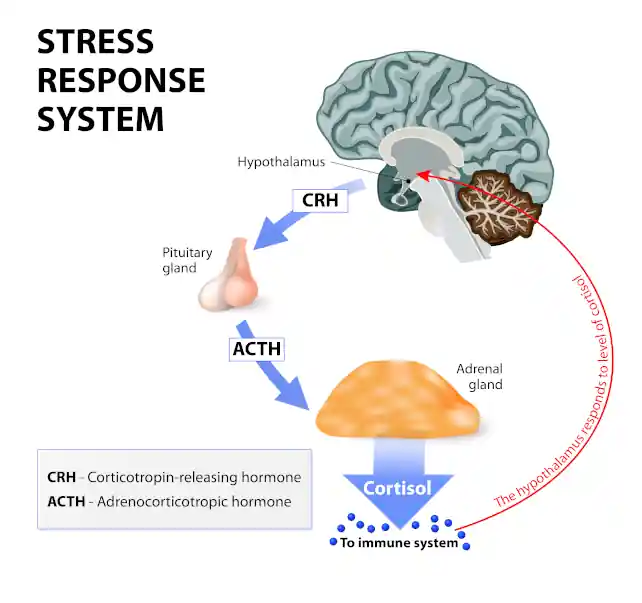
In its acute (short term) form this adaptation to stress is essential for survival. Cortisol raises blood sugar and provides the body with the resources it needs to respond effectively to a challenge. In the longer term, thins are less rosy. Persistently raised cortisol is linked to a broad range of health issues, from peptic ulcers and inflammatory bowel disease to high blood pressure, and blood vessel wall damage, contributing to cardiovascular disease and stroke
Stress And The Nervous System
Sympathetic Nervous system
In addition to cortisol, stress triggers an immediate fight-flight-freeze response through the sympathetic nervous system via chemical mediators including the hormone adrenaline and neurotransmitter noradrenaline
Like the Cortisol response, sympathetic activity mobilizes the body into action to deal with stressors, raising blood pressure, quickening the heart and stimulating breathing in readiness for action
Fortunately, the effects of fight-and-flight are short lived, more strongly associated with positive stress-avoiding action, and has fewer long-term consequences on health
Also, as we shall see, the sympathetic nervous system has its counterpart in an inbuilt anti-stress response mediated by the parasympathetic nervous system, and associated with relaxation, repair, and positive mind-sets. Far from acting antagonistically, the two systems are complementary sides of a single autonomic nervous system tasked with regulating every vital activity which keeps you alive
Stress And Inflammation
A significant consequence of stress on health is inflammation. Inflammation is one of the most basic responses of innate immunity for protecting us against injury and disease. During inflammation the immune system releases chemicals which attract immune cells to deal with invaders, damaged tissues or rogue cells.
While protective in the short term, inflammation can, when either excessive, prolonged (chronic) or inappropriate (eg. auto-immunity) damage the body’s own tissues, leading to problems ranging from intestinal and joint inflammation to blood-vessel damage. Inflammation has even been implicated in some forms of depression
Paradoxically, short-term stress dampens inflammation and boosts immunity (cortisol analogues are used clinically for their anti-inflammatory effects). On the other hand, persistently raised cortisol levels does exactly the opposite, suppressing immunity while raising inflammation
As already mentioned, chronic inflammation has been linked to a wide range of issues, including
- Bronchospasm in asthma
- Intestinal inflammation (Chrohn’s, Ulcerative Colitis, Coeliac’s) with pain, diarrhoea and impaired absorption
- Arthritis with joint swelling with pain
- Blood vessel damage with deposition of fibro-fatty plaques (atheroma) predisposing to heart disease and stroke
- a range of mental health issues, including some forms of depression
Neuroinflammation is an inflammatory response mediated specifically by cells within the brain and spinal cord. By triggering neuroinflammation stress has been shown to be a factor in a number of mental health issues, including depression and schizophrenia. Studies show that stressful life experiences are associated with raised pro-inflammatory chemical mediators (cytokines) in childhood, as well as a higher risk of mental illness in adulthood (Calcia 2016)
A literature review by Viktoriya Maydych (2019) concludes that current research supports a direct link between stress, inflammation and reduced emotional attention, the triad itself being a predictor for depression
Coping With Stress
Not all of Hans Selye’s findings have been borne out by research. More recent studies have found that, depending on the individual’s appraisal of a stressor, the stress response may be short term, triggering sympathetic nervous system responses, longer term, triggering cortisol release, or a mixture both
From this we deduce that how you cope with stress will strongly influence the final outcome. Crucial to stress coping is the extent to which you feel you have the resources to deal with the stressor, as well as the sort of outcome you expect.
Feeling equipped to deal with a stressful situation and expecting a positive outcome is linked to short-term arousal
On the other hand, feeling hopeless, helpless and generally feeling you have little control of a situation, along with a predicted negative outcome is linked to longer-term cortisol related arousal, inflammation and a potentially negative impact on your health and wellbeing
In this respect, individual personality traits, existing support systems and past experiences of stress, especially during childhood, all play their part on how effectively you do or don’t cope with stress
Parasympathetic Nervous System
The Body’s Inbuilt Anti-Stress Response
Fortunately, it’s not a simple question of being stressed or not stressed. The body has also evolved an inbuilt natural relaxation response, mediated by the parasympathetic nervous system. Commonly referred to as rest-and-digest, parasympathetic activity helps your body recover from stress: muscles relax, vital functions like appetite, digestion and evacuation are stimulated, while the heart and breathing rate ease off
The parasympathetic system works to repair tissue damage and replenish the body’s resources depleted by stress, calming the heart and breath, lowering blood pressure and stimulating digestion, assimilation and excretion of wastes. Parasympathetic activity is also actively anti-inflammatory
Mentally, defensive self preservation gives way to social interactivity. This is a time for caring and sharing, eating, grooming, playing. Taken to its full conclusion, you might now better appreciate the parasympathetic nervous system’s other name: feed-and-breed
Parasympathetic responses are mediated primarily via the Vagus nerve, so called because of its long, wandering course from the brain stem to virtually every organ in the body. Vagal activity is triggered by an appraisal of a situation as inherently safe.
External stimulation of the Vagus has sometimes been hailed as the holy grail of instant rest-and-digest. Indeed, external electrical stimulation of the Vagus in the neck has been used successfully to manage treatment-resistant epilepsy and clinical depression. Nevertheless, this is a specialist surgical procedure requiring the implantation of a subcutaneous battery operated device
Direct and indirect mechanical stimulation of the vagus uses stimuli such as pressure to the abdomen, neck and parts of the external ear (tragus), as well as cold applications and vibration from humming and chanting. Though they may help momentarily, their longer term usefulness in dealing with remains spurious at best
On the other hand, the connection of parasympathetic activity to safety opens the door to a world of promising interventions. Yoga, mindfulness, creative visualization and psychological methods such as Cognitive Behavioural Therapy (CBT) all nurture positive mental states to stimulate the rest-and-digest system, using the mind body connection to exert their positive effects
Scientific Evidence For Mind-Body Therapies
Modern health research increasingly takes a bio-psycho-social stance on health and disease. The model replaces the old biomedical approach which sought to understand disease solely by looking at biological factors, with a broader understanding where personal history, lifestyle choices and the social and physical environment interact with biological processes to support or perturb health
This more holistic perspective is strongly supported by research. Where studies show that chronic stress is linked to many common health issues of our day, including cardiovascular disease, obesity, and autoimmunity, they also strongly support the effectiveness of interventions which promote relaxation and positive mental states to enhance immune activity, reduce inflammation and provide a whole range of positive physical and mental health outcomes
Having already looked at the effects of stress and coping with stress on health, we can now consider the evidence for positive emotions on wellbeing
Positive Emotion, Coping And Health
More recently, research has focused on the mind body link in the context of positive emotions. Studies supports the theory (Fredrickson, 1998) that emotions like optimism, curiosity, joy and love help to broaden an individual’s thought–action repertoire, prompting them to let go of automatic behaviours in favour of novel, creative thoughts and actions. This leads to a building of personal resources for dealing with current and future stressful events, as well as helping to undo some of the harmful effects of negative emotions
A number of subsequent studies have supported the role of positive emotions (Fredrickson, Cohen et al, 2000-2008) in coping. People who score highly for resilience – the ability to bounce back from and adapt to the demands of distressing events – experience more positive emotions, deriving positive meaning from day to day stressors. At the physical level they also also demonstrate faster rates of cardiovascular recovery (slowing of the heart, lowering of blood pressure) following laboratory induced stressful events (Tugade & Fredrickson, 2004).
Nor are positive emotions linked solely to the expectation of a positive outcome. Folkman (1997) found that positive emotions can also arise from events with unfavourable outcomes, provided the individual can find meaning or benefit arising from their experiences
The ability to find benefits from difficult experiences has been linked to reduced distress following bereavement, heart attack and exposure to disasters, including damage to property and loss of life (Tennen & Affleck, 1999).
Benefit-finding has been linked to better physical health outcomes, ranging from a lower propensity to re-infarction following a first heart attack, to reduced pain and improved mobility in inflammatory arthritis
Mind-Body Disciplines
Yoga And Meditation
Yoga and meditation are mindfulness-based practices promoting self-awareness, relaxation, and resilience, and have been shown to enhance the whole spectrum of bodily and emotional health
Research consistently shows that people who practice yoga report lower levels of anxiety, depression, and stress, and experience significant improvements in physical fitness parameters such as flexibility, strength, and cardiovascular endurance
Yoga has been shown to improve all the major risk factors for cardiovascular and cerebrovascular (stroke) disease, reducing blood pressure, and improving blood cholesterol profile. Improvements have been found in respiratory function, chronic pain management and stress coping, leading to a reduction in circulating stress hormones while stimulating rest-and-digest
Want to see for yourself how yoga works? Join one of our weekly yoga classes. Opt for our more active osteopathic yoga to improve your physical and mental fitness, or a calming therapeutic yoga to help you deal with stress and support your physical and mental wellbeing
Breath Work
Breath work is an integral part of yoga practice. Life force, or vital energy (prana) manifests in the body as breath, and in the mind as thinking and feeling. Breathwork in yoga is known as pranayama: control of the vital force. Thus, when the mind is excited (through joy or distress) the breath is quick, sometimes erratic. When the breath is quiet the emotions are calm and the mind is clear and relaxed
Quiet breathing (Zaccaro, 2018) has been linked to objective measures of parasympathetic activity, such as increased heart-rate-variability (HRV is the difference in heart rate during inhalation and exhalation and is a measure of Vagal tone), as well as the subjective experience of relaxed wellbeing. Though the precise mechanisms remain under review, breath affects mental wellbeing via several pathways:
An interoceptive (ability to perceive the state of the inner body) mechanism related to sensors in the breathing apparatus, likely mediated by the Vagus nerve
Receptors within the nose may also signal directly to emotional centres in the brain
Breathing can also affect physical and mental wellbeing through altered blood carbon dioxide levels.
For example, low blood carbon dioxide levels (hypocapnia) resulting from overbreathing is known to narrow the arteries supplying the brain, heart and other vital organs to reduce blood flow – symptoms of vasoconstriction include brain fog, fatigue and tingling and numbness as well as generalized muscle and abdominal pain
Over-breathing can have a number of causes, including some respiratory diseases, but is also common in otherwise healthy individuals experiencing psychological stress and anxiety, the symptoms further exacerbating the causes in a self sustaining vicious cycle
Yoga and other forms of breathwork that encourage quiet, slower breathing can help prevent excessive carbon dioxide loss and in time allow your system to return to balance. You’ll find more information and practical breathing exercises from my post breathing pattern disorder
Creative Visualization And Guided Imagery
An intrinsic practice in yoga and other mindfulness approaches, visualization has been shown to provide tangible health benefits associated with the systemic relaxation response mediated by the parasympathetic system and Vagus
Brain imaging techniques show that visualization stimulates the brain areas involved with inner perceptions as if they were actually happening. In the same way that the stress response can be triggered by the mere anticipation or memory of a stressor, the relaxation response can be elicited through techniques such as yoga nidra, a guided practice using body and breath mindfulness, and progressing through various stages of creative visualization to reach the deepest possible level of relaxation while remaining awake
Mindfulness
Mindfulness-Based Stress Reduction (MBSR) and Mindfulness-Based Cognitive Therapy (MBCT) are modern takes on traditional Buddhist meditation with a very strong evidence base. Initially developed to manage stress and depression respectively, mindfulness helps develop positive emotions, resilience and cognitive function, while also exerting positive effects on physical health through the mind body connection, including a reduction in blood pressure and circulating stress hormones
Gut Brain Axis:
Health, Nutrition And The MicrobiomeThe role of nutrition in health, though crucial, is beyond the scope of this article. One aspect of nutrition, however, is so pertinent to our discussion of the mind-body link that I would be negligent to ignore it. It concerns the microbiome, those trillions of bacteria and other micro-organisms living on every square inch of the surface of your body, from the lining of your gut and lungs to your skin, nails and even eyelashes, and one of the hottest topics in current health science
In an age of antibiotics and antibiotic resistance, where anti-microbial products find their way into everything from cleaning materials to items of clothing such as socks (it’s supposed to stop them from smelling), the role of “good” bacteria in health has become an imperative
As mentioned, the gut houses colonies of micro-organisms essential for health. Though the subject is too large to cover in a couple of paragraphs, there are some major topics worth discussing in relation to the mind body connection
The first is the gut-brain axis, a two way connection between gut and brain. We’ve described the vagus nerve as the main carrier of rest-and-digest activity from the brain to the organs. Yet 80% of Vagal nerve fibres are sensory, carrying information from the organs to the brain. And since, in terms of surface area, the gut is the largest organ in the body, a good part of the vagus is dedicated to listening to the gut
Gut bacteria produce more than 90% of the body’s serotonin, a chemical transmitter involved in mood and wellbeing (low serotonin levels have been linked to clinical depression), as well as digestive function, and previously thought to be largely confined to the brain.
In addition to serotonin bacteria manufacture health-promoting substances such as butyrate and propionate, short chain fatty acids with an important role in supporting immunity and down-regulating inflammation
Though the health of the gut microbiome is influenced by numerous factors, the effects of diet are unquestionable. A picture is emerging of optimal gut health depending not just on a large number of organisms, but also a wide variety of different species
Pro-biotic foods containing live or dormant bacteria can help replace beneficial bacterial colonies. Probiotics include fermented products including yoghurt, kefir and kombucha as well as bean and vegetable ferments such as miso, sauerkrout and kimchi
While directly supplying beneficial bacteria, studies show that commercial pro-biotics deliver a rather narrow range of species with limited benefits. Pre-biotics, on the other hand, provide the nutrition necessary for good bacteria to thrive, and have been shown to support a microbiome with much greater diversity. And the most abundant and effective pre-biotic? Fibre
The bulk of the fibre we ingest is cellulose, an insoluble carbohydrate which our digestive system is unable to break down. Fibre is, however, food for microbiotic organisms. In a beautiful display of symbiosis (a relationship of mutual benefit) our friendly microbes break down and feed on fibre while releasing by-products essential for our physical and mental wellbeing
Thus, a high fibre diet, one rich in whole grains, pulses and vegetables is one of the very best ways to support your friendly gut bugs, allowing them to thrive and provide in return a bounty of health and happiness
Psychological Support
Cognitive Behavioural Therapy
CBT works on the reciprocal relationship between cognition (thinking) and behaviour, helping individuals identify and change habitual thought patterns using a range of activities, such as being in the present moment (mindfulness), relaxation and reframing of negative thought patterns
CBT works on positive emotions by helping individuals to identify the negative assumptions underlying their thinking, consciously nurturing positive thoughts and behaviors until these become the new norm
By improving self awareness, reducing negative thoughts and developing better coping skills CBT helps to reduce anxiety and improve emotional resilience. Studies show that CBT can help with anxiety, depression, panic attacks, phobias and post-traumatic stress. CBT has also been used successfully in obsessive compulsive disorders and a range of eating disorders. Physical health benefits include relief from chronic pain, fibromyalgia and chronic fatigue, as well as a range of physical disorders with a strong psychological component, such as irritable bowel
Holistic Body Therapies
The contribution of body-work to your psycho-somatic wellbeing is well documented. Holistic body therapies, including holistic massage, Rolfing, shiatsu, tuina, chiropractic and osteopathy, all embrace the philosophy of body-mind unity
Osteopathy
While some look on osteopathy as a form of manual therapy for relieving aches and pains, and we hopefully do a decent job of it, osteopathy is a holistic system of healthcare which works with your structure for the sake of your total physical and mental wellbeing. Put simply, osteopaths aim to optimize your structure to create an optimal environment for your vital functions to thrive
Structural as well as cranial osteopaths, work with the functional and structural relationships between the musculo-skeletal system (soma), internal organs (viscera), and mind (psyche), with the spinal cord and its 31 pairs of spinal nerves within the vertebral column as principle mediators
It’s no coincidence that the range of conditions osteopaths can help with, according to available evidence, overlaps with most other therapies working through the same mind-body link
You can read more about osteopathy and its benefits with by clicking the link
Towards A Bio-Psycho-Social Model Of Health
Where in the past, acute, especially infectious, diseases have been the principal cause of ill health and death, the modern age has seen a shift towards chronic illnesses like cardiovascular disease, diabetes, obesity and cancer
Modern scientific medicine has produced veritable miracles in curing and eradicating infectious diseases, and increasing human life-spans beyond anything previously possible. Yet an exclusively bio-medical approach has fallen short of addressing the epidemic of chronic physical and mental health issues resulting from factors such as social isolation and excessive stress
As the limitations of an exclusively bio-medical view of health and disease become increasingly apparent, the need to bring the psyche into the picture is ever more pressing. Nor do the mind and body operate in a vacuum, but rather within a complex set of interacting factors which include personal history, job satisfaction, family and social relationships, coping strategies, diet and access to clean air and water, to name but a few
More than ever, we need to address the health challenges of our day from a more holistic, ecological perspective, with the body, mind and environment as essential components and the individual at the centre of her wellbeing
References
- Yun-Zi Liu et al, (2019). Inflammation: The Common Pathway of Stress-Related Diseases.
- M A Calcia et al, (2016). Stress and neuroinflammation: a systematic review of the effects of stress on microglia and the implications for mental illness
- Fredrickson, B.L. (1998). What good are positive emotions? Review of General Psychology, 2, 300–319.
- Cohen, M.A., & Fredrickson, B.L. (2006). Beyond the moment, beyond the self: shared ground between selective investment theory and the broaden-and-build theory of positive emotions. Psychological Inquiry, 17, 39–44
- Fredrickson, B.L.et al, (2008). Open hearts build lives: positive emotions, induced through loving kindness meditation build consequential personal resources
- Fredrickson, B.L., & Joiner, T. (2002). Positive emotions trigger upward spirals toward emotional well-being. Psychological Science, 13, 172–175.
- Fredrickson, B.L., & Levenson, R.W. (1998). Positive emotions speed recovery from the cardiovascular sequelae of negative emotions. Cognition and Emotion, 12, 191–220.
- Fredrickson, B.L., Mancuso, R.A., Branigan, C., & Tugade, M.M. (2000). The undoing effect of positive emotions. Motivation and Emotion, 24, 237–258.
- Fredrickson, B.L., Tugade, M.M., Waugh, C.E., & Larkin, G.R. (2003). What good are positive emotions in crises? A prospective study of resilience and emotions following the terrorist attacks on the United States on September 11th, 2001. Journal of Personality and Social Psychology, 84, 365–376.
- Michele M Tugade, B L Fredrickson (2004). Resilient individuals use positive emotions to bounce back from negative emotional experiences. J Pers Soc Psychol 86(2):320-33
- A Zaccaro et al (2018) How Breath-Control Can Change Your Life: A Systematic Review on Psycho-Physiological Correlates of Slow Breathing
Rest And De-Stress – The Vagus Nerve And Yoga
While most of us are familiar with the body’s stress response, rest-and-digest has only more recently received due attention. Organized centrally, rest and digest is mediated by the Vagus
Body Work Or Energy Healing: What Is Cranial Osteopathy?
Originally a method for treating the cranium, modern cranial osteopathy is a gentle, minimally invasive treatment modality for the whole body
Hatha Yoga Benefits For Your Physical And Mental Health
From greater strength, mobility and fitness, to improved physical and mental health, discover the science behind hatha yoga’s remarkable health benefits