
Hatha Yoga Benefits
Your Mind, Body And Spirit
Practiced by an estimated 300 million people worldwide, yoga is one of the top 10 most popular forms of “exercise”. The familiar practice of combining movement, postures, breath and awareness is properly known as hatha yoga. And as practitioners enjoy their practice, science uncovers an ever expanding circle of benefits. From increased fitness, mobility and strength, to lifting your mood and boosting immunity, hatha yoga benefits your mind, body and soul
Hatha Yoga In Context
Spanning millennia, yoga has its roots in ancient India. The word itself means union. And the ultimate goal of yoga is to realize the unity of all things
Traditionally, the yoga tree has four branches
- yoga of inquiry & wisdom – jñana
- yoga of love and devotion – bhakti
- yoga of dispassionate action – karma
- yoga of structure & method – raja (kingly) or ashtanga (8-limbed)
Hatha Yoga
Modern practices like Iyengar, hot yoga, yin and and yoga flow are, almost without exception, all variants of Hatha Yoga
Hatha Yoga emerges as a fusion of the fourth branch, Ashtanga / Raja.
This methodical approach joined forces with with Tantra, another Indian system that sought to include the body into the realm of spirituality, to create Hatha
The practice of Ashtanga incorporate ethical living with bodily posture, breath control, and focusing attention, resulting in varying degrees of mental stillness
Like its parent, Ashtanga, Hatha also works with the body, breath and attention. But Hatha works more explicitly with the mind-body connection. In Hatha, the physical body is the access point into the deeper recesses of the mind and, ultimately, the spirit or essential self
Hatha Yoga And Health
So, how do hatha yoga practices convert to such concrete health benefits?
Yoga, Exercise And Health
Exercise in general greatly benefits health. Exercise improves cardiovascular health by altering the blood lipid (fats) profile. Exercise mobilizes enzymes which tip the balance from “bad” (low density), towards “good” (high density) cholesterol
Exercise lowers blood pressure, increases blood sugar metabolism, improves mental health and generally enhances quality of life and longevity
While many sing the praises of higher impact aerobic exercise, lower impact exercise provides similar benefits. Thus, yoga has been shown to benefit cardiovascular, metabolic, and mental health at levels comparable to aerobic exercise
Mindfulness In Hatha Yoga
We’ve discussed the physical effects of yoga and exercise on health. But yoga has another dimension. Hatha yoga is a mind-body practice incorporating an essential element of mindfulness
If hatha yoga starts from the body, its goal is the integration of the whole person, body mind and spirit. Indeed, most yoga teachers and practitioners would agree that without mindfulness, yoga is not yoga
Mindfulness has been shown to
- lower blood pressure
- soother irritable bowel
- relieve chronic pain
- boost immunity
Mental health benefits of Mindfulness include improvements in
- sleep
- anxiety
- depression
- and emotional regulation
Many of the benefits of hatha yoga are linked to its mindfulness dimension. And in particular its ability to help you deal with stress
What Is Stress?
Stress is your body’s response to any perceived challenge or threat. What is initially a psychological appraisal triggers a series of physical responses to help you rise to the challenge
Fight-Flight
Short term, your body mounts a flight-flight response mediated by the sympathetic nervous system via the hormone adrenaline
Fight and flight prepares your body for action,
- quickening the heart
- and breathing
- and raising blood pressure
- while suppressing digestion and other vital functions
Such a response is short lived and the body soon returns back to base-line
Chronic Stress
Repeated or ongoing stress, on the other hand, triggers a different response.
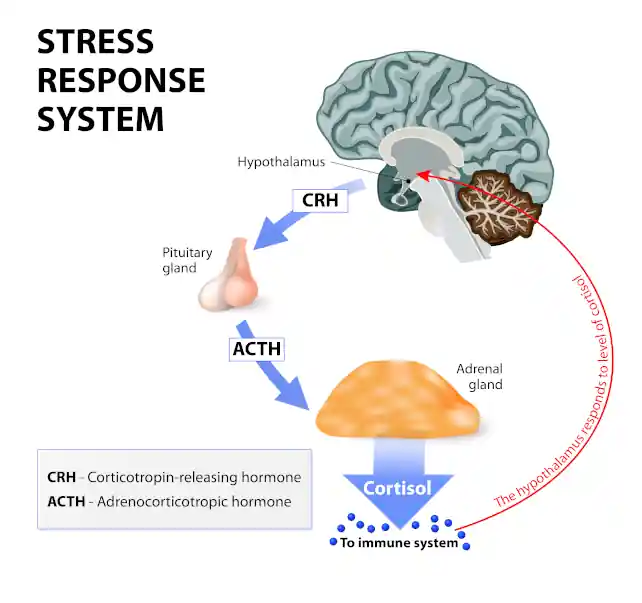
Long term or chronic stress is managed by cortisol – a steroid hormone released from the same adrenal glands in response to signals from the brain (hypothalamus/Pituitary – as per the diagram)
In the normal run of things, cortisol is protective, helping your body to rise to the challenge and deal with the stressor
Chronic Stress And Inflammation
When moderate, intermittent and within your capacity to manage, stress is positive, making you stronger and more resilient. However, when severe or persistent, especially if you feel helpless to deal with stressors, stress becomes harmful to your health
Runaway stress responses drive up inflammation to ultimately damage your tissues and organs such as the stomach lining, heart and blood vessels. They raise blood pressure, further damaging blood vessels, dysregulate the immune system and create maladaptive brain changes associated with anxiety, depression and other mental health issues
Rest, Repair And The Vagus
If your brain is wired to detect danger, it is equally able to sense safety. And the response is not a simple switching off of stress, but a positive activation of rest and digest
Rest and digest is driven by the parasympathetic nervous system. As sits name implies, these activities let your body recover from stress. They help your body repair damage and replenish resources exhausted by stress. Rest and digest signals is distributed widely to the vital organs via the highly branched vagus nerve.
The Vagus Nerve And Yoga
The vagus nerve is a hot topic because it mediates many of the beneficial effects of hatha yoga on your wellbeing. You can read more about the vagus nerve and yoga in a blog post of the same name. You can explore the autonomic system in more detail in my post on the mind-body connection
Let’s now look at the many ways hatha yoga can help you stay fit, healthy and happy
Hatha Yoga For Musculoskeletal Health
Evidence of yoga’s benefits for structural health and fitness is compelling. Yoga has been shown to bring relief from back and neck pain, headache and joint pain and stiffness from wear and tear to improve overall functionality and quality of life
Yoga also enhances your overall level of fitness. Though more vigorous styles approach the threshold for being considered cardio training, studies show that slow and calming hatha practices provide comparable benefits for cardiovascular health, albeit via a different physiological pathway
Fast or slow, gentle or vigorous, yoga will make your body stronger, more flexible and more resilient. By being mindful of your movement and posture you can free your body from old postural and movement habits to release tension and build better and healthier ways of using your body
Check the list below for just a small fraction of the scope of yoga in musculoskeletal health:

Low Back Pain
A catch all for pain in the absence of serious signs such as trapped nerve, mechanical, or non-specific low back pain (NSLBP) is the commonest form. Mechanical back pain can be precipitated by strenuous activity or appear apparently out of nowhere. It has strong links to psychosocial stress and a sedentary lifestyle
Mechanical low back pain usually resolves withing 2-3 weeks. Or it can persist to become chronic. It is also recurrent, leading some authorities to state that
Fortunately the most recent systematic reviews(1,2) continue to support yoga as an effective non-pharmacological method for managing chronic low back pain, with tangible improvements in pain and functional disability. A 2023 review(1) concludes that
Though not superior, the effects of yoga were of comparable size to active controls (other forms of active exercise)
CAUTIONS
Sciatica
Sciatica, AKA trapped sciatic nerve, is most commonly associated with a bulging or ruptured disc at the base of the spine
While gentle exercise, and generally staying mobile yields a better outcome than excessive rest, practising yoga with active sciatica requires great selectivity and often modification
Though yoga is rarely associated with serious harmful effects, sciatica requires expert management, making it essential to work with a suitably qualified teacher
Benign forms of sciatic nerve entrapment include the “Piriformis syndrome”, where the sciatic nerve is subject to pressure by the Piriformis muscle deep in the buttock
Yoga is an excellent form of exercise to improve the pelvic mechanics, reduce Piriformis spasm and release the sciatic nerve
As always, diagnosis of the cause of pain and other symptoms is fundamental for setting up a targeted yoga programme
Neck Pain
Exercise, manual therapy, massage and yoga are all used with variable success
Yoga has been associated with a reduction pain and disability and improvement in quality of life(3-6). Despite the mixed methodological quality in the available studies the effect is sufficient for systematic reviewers to cautiously recommend yoga for the treatment of neck pain
CAUTIONS
Trapped Nerve
As with low-back pain, neck pain may be associated with a trapped nerve
Benign forms of trapped nerve include a “Thoracic Inlet Syndrome”, where the nerve trunks to the arm may be tethered between the upper ribs and clavicle or neighbouring structures
Yoga postures and breathing are a great way to release pressure on the nerves
Where the nerve is trapped by a bulging, ruptured or worn disc yoga must be practiced with great caution under the supervision of a qualified practitioner
Tension Headache & Migraine
Tensi0n headaches are usually dull, bropadly distributed, and affect both sides of the head. They are not associated with nausea, visual disturbance or other symptoms
Migraine is considered distinct from tension headache, though the two are considered to lie along a single spectrum. Migraine is associated with symptoms such as nausea and visual disturbance, may be pulsatile and is often unilateral
There is sometimes an aura” preceding the headache: the migraine aura includes ziz-zag patterns or blind spots in the field of vision, numbness. Migraine can also present as an aura without headache
Though the often cited issues of the quality of study design apply, tension headache and migraine both appear to respond favourably to yoga
Systematic reviews for tension headache have yielded positive results for pain severity, frequency and duration (7,8)
Systematic reviews on migraine have also found evidence of benefit, especially when yoga is combined with conventional / usual care, such as anti-migraine medications (36,37)
Practising yoga has been found to reduce both the frequency and intensity of attacks, migraine-related disability (MIDAS scores) and the need for medication
By helping you to relax yoga reduces stress and improves autonomic regulation, reducing fight-flight responses in favour of vagus nerve mediated rest-and-digest
Osteoarthritis
Osteo-arthritis is joint pain from wear-and-tear. Associated with age, it can also affect younger people, especially as a long term consequence of fracture and other injuries
Though joint wear is not significantly reversible, pain and stiffness do decrease with improved joint function, providing a rationale for the use of exercise in the rehabilitation of osteoarthritic pain
This is confirmed by systematic reviews, which have found yoga to be helpful with osteoarthritis-related pain, stiffness and function (9,10)
Check my osteopathic yoga page to see how yoga can help you with all these musculoskeletal ailments and more
Hatha Yoga For Internal Health
Prana: Vital Force And Health
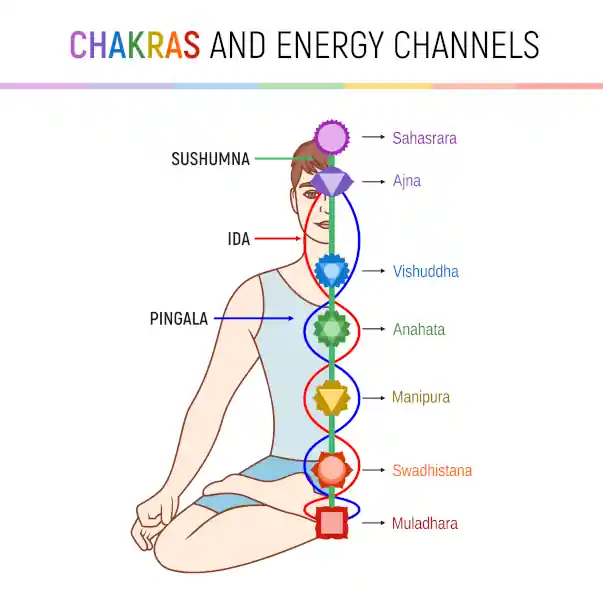
Key to hatha philosophy is the system of channels coursing through the body known as, nadis (rivers) which carry the vital life force prana. Of the 72,000 nadis three are of special significance
In the spinal midline, the shushumna nadi is the core and centre of being.
Ida, the left channel, is related to tha, the cool “moon” principle, and governs the rest and digest activities of the parasympathetic nervous system
On the right, the warm “sun” channel Pingala is related to ha and governs the fight-flight sympathetic nervous system
Prana rises in the pingala and descends within the ida nadi. Where the channels intersect from right to left they form energy vortices known as chakras, a Sanskrit term meaning wheel. Every chakra is associated with a colour and sound (mantra). Each also relates to a body region, a vital bodily function, and a mental state. Hatha yoga uses postures, breath regulation and various kinds mental techniques to purify the channels. This allows prana to flow unhindered for the maintenance of health
Yoga, Physiology And Health
Physiologically the brain, spinal cord and nerves regulate and maintain all life processes and provide a major connection between soma (body frame), viscera (vital organs) and psyche (mind, or soul)
Thus, in yoga a healthy spine is considered to be an essential for health. For similar reasons, the functional relationship of spinal segments to organ systems is also a major focus of holistic systems of body work such as chiropractic and osteopathic medicine
The relatively recent discovery of the gut-brain axis is currently a hot topic.
It’s well known that the microbiome, those colonies of beneficial microbes living in the human gut, are essential for digestive health. More recent research has found them to produce substances that support vital functions from inflammation and immunity to insuline sensitivity and blood glucose regulation
Perhaps most remarkable of all is their role in mental health. To give just one example, the microbiome produces the bulk of serotonin in the body. This vital signalling molecule is essential for mental wellbeing, with imbalance being linked to mood disorders such as depression. Digestive and mental wellbeing are mutually connected via the vagus nerve, a major rest-and-digest pathway activated by yoga practice, and discussed at length in my article the vagus nerve and yoga
Check the sections below to see how yoga can improve your vital health
Cardiovascular
Systematic reviews (11,12) have found yoga helps reduce the major risk factors for the world’s number one killer, cardiovascular disease, at levels comparable to aerobic exercise:
This has practical significance, since yoga could be recommended to individuals whose level of fitness and mobility might not easily permit them to engage in conventional cardiovascular exercise
A recent 2023(11) review found that:
Other reviews focusing specifically on the effects of yoga on blood pressure(13-14), a top risk factor for cardiovascular disease and stroke, after recommending improvements in study design, reach similarly positive conclusions
Respiratory
An essential part of yoga practice, breath regulation is your passport to calming the mind, developing attention and stimulating parasympathetic tone, the body’s rest and repair mechanism, to boost every aspect of you health
This is borne out in a 2018 systematic review (17) showing how slow breathing increases parasympathetic activity and shifts brain activity towards alpha waves which are associated with emotional control and psychological well-being
Yoga breath-work has also been shown to improve respiratory function in people with serious respiratory disease. A 2024 systematic review(16) found that breathing techniques, including diaphragmatic, pursed lip and yoga breathing, improved breathlessness and health-related quality of life in people with chronic obstructive pulmonary disease COPD and asthma
Yoga may also be helpful in managing stress-related dysfunctional breathing. Though the small number and low quality of studies on hyperventilation syndrome, an extreme form of dysfunctional breathing, are insufficient to inform opinion(15), yoga has been found to help with the anxiety and emotional dysregulation which are the main drivers of the symptoms
Digestive
Practicing yoga is hugely beneficial to your digestive health. It is now well established that the gut and brain are intricately linked. Thus, the function of your digestive system affects your mental and emotional state. And your thoughts and feelings profoundly influence your digestive health
This mind-body link is especially pertinent in so called functional or psychosomatic digestive issues. And none fits the bill better than the all too common condition of irritable bowel Syndrome. IBS is a condition of “unknown cause” affecting the digestive system. Symptoms include stomach cramps, bloating, diarrhoea and constipation. It affects 11 of 26 people globally
It is likely that IBS is not a single entity but an umbrella of problems we have not yet identified. Whether the issue starts in the gut or brain, the two-way relationship holds
Diet obviously plays a significant role. People suffering with IBS symptoms may have multiple food sensitivities. While avoiding certain food stuffs is helpful in the short term, establishing a healthy bacterial balance is essential
Pro-biotics may offer some solution. Fermented foods such as yoghurt and vegetable ferments like kimchi may help by introducing beneficial organisms to your system. If you don’t tolerate fermented foods well, adding fibre to your diet provides a pre-biotic base for your gut bacteria to thrive. Including home cooked plant based dishes in your diet is an excellent way to avoid additives and increase fibre and other nutrients essential for a healthy gut
While dietary support is helpful, gut health in general, and IBS in particular, is strongly affected by psychological stress. And it responds positively to stress reduction programmes such as yoga
On the back of an earlier study(18) linking yoga to the management of IBS, a more recent 2024 systematic review(19) found that yoga improved IBS symptom severity, mood-related symptoms, and quality of life. Both studies recommend further research before recommending yoga as a definitive treatment for IBS
Hatha Yoga Benefits On Mental Health
Dr Jon Kabat Zin’s development of mindfulness-based stress reduction, a secular practice derived from ancient Buddhist meditation in 1970’s, saw an explosion of research into the effects of mindfulness meditation and yoga, into virtually every area of health
Yoga and meditation have been widely studied within the field of mental health and has helped to widen our perspective of psychosomatic disorders and mind-body medicine
Bearing in mind mental and physical health are intimately connected, here is the evidence of the benefits of yoga on selected aspects of mental wellbeing
Stress
Together with being sedentary, stress is one of the biggest killers of adults worldwide
Perceived stress creates arousal with effects including a rise in blood pressure, systemic inflammation, anxiety and a lowering of your mood and energy
Combining gentle exercise with mindfulness and deep relaxation techniques such as yoga nidra, yoga helps you keep your body active and your mind relax to offset the harmful effects of stress and being sedentary
Studies(20-24) show that a number of movement therapies, including yoga, dance, Tai ‘Chi and others are effective means of managing stress. Styles of yoga studied, including Hatha, Bikram, Kundalini, Sudarshan Kriya, Kripalu and Yin were all effective
Anxiety & Depression
Yoga’s claims to fomenting inner calm and happiness are borne out in several studies
Systematic reviews(25,26) have found that in addition to being effective for reducing anxiety, yoga has a positive effect on emotional wellbeing generally
Studies(25-29) also conclude that yoga is an effective tool for individuals with elevated levels of depression as well as those diagnosed with major depressive disorder
Cognitive Function
Yoga is effective in improving executive brain functions and memory in healthy individuals, and may help mitigate cognitive decline in older adults(30-35)
Reviews have found that yoga may improve cognitive function and help slow down further decline in people with mild cognitive impairment
In healthy populations yoga is linked to improvements in executive function, memory, attention and processing speed
Hatha Yoga Classes
Having read about the fantastic health benefits of hatha yoga, join us on one of our regular live online yoga classes
We have osteopathic yoga emphasizing the importance of a healthy structure for your overall wellbeing. Or enjoy a more restful therapeutic yoga class focused on stress reduction. Whether your point of entry is your body or your mind, the result will be a calmer, healthier and happier you
Manuel is a UK registered osteopath and yoga teacher working over four decades with people of all ages and backgrounds. As well as hands-on osteopathy he offers small group and one-on-one private yoga classes online, and yoga retreats in spain
In a world that just keeps turning yoga offers a point of stillness, bringing solace and health to millions. Through a variety of practices, each more or less suited to your individual temperament, yoga helps to offset the effects of stress and anxiety to bring relief from pain and enhanced physical and mental health, as it helps you to reconnect with your body, your feelings and your deepest self
With an estimated 300 million practitioners worldwide, far from being a fad, yoga continues to offer everyone a means to living a healthier and happier life
References
- Efficacy and safety of yoga for the management of chronic low back pain: an overview of systematic reviews. X Zhang et al, 2023
- Yoga for treating low back pain: a systematic review and meta-analysis. D Anheyer et al, 2022
- Effects of yoga on patients with chronic nonspecific neck pain: A PRISMA systematic review and meta-analysis. D Anheyer et al, 2022
- Effects of yoga on chronic neck pain: a systematic review and meta-analysis. H Cramer, et al, 2017
- Effects of yoga on chronic neck pain: a systematic review of randomized controlled trials. Sang-Dol Kim, 2016
- Effectiveness of Iyengar yoga in treating spinal (back and neck) pain: A systematic review. Crow EM, et al, 2015
- Yoga for Treating Headaches: a Systematic Review and Meta-analysis. Anheyer D, Klose P, Lauche R, et al. 2019
- Effects of yoga exercises for headaches: A systematic review of randomized controlled trials. Kim, Sang Dol. 2015
- Yoga for Osteoarthritis: a Systematic Review and Meta-analysis. R Lauche, et al. 2019
- The Effects of Yoga on Pain, Mobility, and Quality of Life in Patients with Knee Osteoarthritis: A Systematic Review. Kan L, et al. 2016
- The Effect of Yoga on Cardiovascular Disease Risk Factors: A Meta-Analysis. A Isath, et al 2023
- The effectiveness of yoga in modifying risk factors for cardiovascular disease and metabolic syndrome: A systematic review and meta-analysis of randomized controlled trials. P Chu, et al. 2020
- Yoga as Antihypertensive Lifestyle Therapy: A Systematic Review and Meta-analysis Yin Wu et al, 2019
- Effect of Yoga on Blood Pressure in Prehypertension: A Systematic Review and Meta-Analysis J S Khandekar et al 2021
- Breathing exercises for dysfunctional breathing/hyperventilation syndrome in adults. Jones M, et al. 2013
- Breathing techniques to reduce symptoms in people with serious respiratory illness: a systematic review. A T Burge, et al. 2024
- How Breath-Control Can Change Your Life: A Systematic Review on Psycho-Physiological Correlates of Slow Breathing. A Zaccaro, et al. 2018
- Effect of Yoga in the Therapy of Irritable Bowel Syndrome: A Systematic Review, Schumann D et al. 2016
- A systematic review of yoga for the treatment of gastrointestinal disorders. E R Thakur et al. 2024
- Effects of yoga on stress in stressed adults: a systematic review and meta-analysis. Alina Schleinzer et al. 2024
- Effects of Yoga on Stress Among Healthy Adults: A Systematic Review F Wang, A Szabo. 2020
- A systematic review of randomised control trials on the effects of yoga on stress measures and mood. Michaela C. Pascoe, et al. 2015
- Effects of yoga on stress management in healthy adults: A systematic review. Chong CS, et al. 2011
- How does yoga reduce stress? A systematic review of mechanisms of change and guide to future inquiry. Kristen E. Riley & Crystal L. Park 2015
- Yoga-based interventions may reduce anxiety symptoms in anxiety disorders and depression symptoms in depressive disorders: a systematic review with meta-analysis and meta-regression. J Martínez-Calderon, et al. 2023
- Effect of yoga-based interventions for anxiety symptoms: A meta-analysis of randomized controlled trials. S Zoogman, et al. 2019
- Yoga for Depression and Anxiety: A SYSTEMATIC REVIEW. Hanson, Rachel, Social Work Master’s Clinical Research Papers. 2016
- Yoga for anxiety: A systematic review and meta-analysis of randomized controlled trials. Cramer H, et al. 2018
- Cramer H, Lauche R, Langhorst J, Dobos G. Yoga for depression: a systematic review and meta-analysis. Depress Anxiety. 2013 Nov
- Influence of Yoga on Cognitive Functions in Individuals with Mental Disorders: A Systematic Review of Randomized Controlled Trials. C Kaligal, et al. 2023
- A systematic review of the health effects of yoga for people with mild cognitive impairment and dementia. Diana Karamacoska, et al. 2023
- Effects of yoga-related mind-body therapies on cognitive function in older adults: A systematic review with meta-analysis. K K Bhattacharyya, et al. 2021
- Effects of yoga-based interventions on cognitive function in healthy older adults: A systematic review of randomized controlled trials. Sara Hoy, et al. 2021
- Impact of mind-body interventions in older adults with mild cognitive impairment: A systematic review. Farhang, M, et al. 2019
- Yoga and Cognition: A Meta-Analysis of Chronic and Acute Effects. Gothe, et al. 2015
- Effectiveness of yoga therapy for migraine Qi Wu et al. 2022
- Effect of Yoga on Management of Migraine S Rawat et al. 2023
Rest And De-Stress – The Vagus Nerve And Yoga
While most of us are familiar with the body’s stress response, rest-and-digest has only more recently received due attention. Organized centrally, rest and digest is mediated by the Vagus

Body Work Or Energy Healing: What Is Cranial Osteopathy?
Originally a method for treating the cranium, modern cranial osteopathy is a gentle, minimally invasive treatment modality for the whole body
Yoga And The Mind Body Connection
Understanding how the mind and body connect is the springboard for practical strategies to enjoy a healthier, happier life
Contact Manuel